


SEO for Businesses in Saudi Arabia: A Practical Playbook
A practical SEO playbook for Saudi and Gulf companies: Arabic search behaviour, bilingual sites, technical and local SEO, content, measurement and a 90-day plan.

خلاصة المقال
- 01Build your keyword list from Saudi queries in Search Console, including dialect, spelling variants and mixed-language searches, not from tool volumes alone.
- 02Give each language its own URL with reciprocal hreflang and self-referencing canonicals, and write Arabic first instead of machine-translating.
- 03Local SEO rests on an accurate Google Business Profile, identical name, address and phone everywhere, and genuine reviews that all get a reply.
- 04Measure success as leads and sales in GA4 and your CRM, and expect 6 to 12 months or more for competitive commercial keywords.
What does SEO for businesses in Saudi Arabia actually involve?
SEO for businesses in Saudi Arabia means making your site the fastest, clearest and most trustworthy answer to what Saudi customers type into Google, whether in Arabic, English or a mix of both. In practice, that means researching keywords by intent, building separate Arabic and English pages, keeping the site technically healthy, strengthening your Google Business Profile, and publishing expert content that earns links.
Below is the playbook we follow on Saudi and Gulf websites, ending with a 90-day plan you can hand to your team. The goal throughout is leads and sales, not vanity traffic.
How do Saudi customers search, and which keywords should you target?
Arabic search in the Kingdom has its own patterns; ignore them and you optimise for words customers rarely type.
Dialect versus Modern Standard Arabic
Websites are written in formal Arabic, but many customers search in Saudi dialect: «ابغى», «وش أفضل» and «كم سعر» alongside the formal «أريد», «ما أفضل» and «بكم». Voice search leans further towards dialect. Keep pages in clear Modern Standard Arabic, but let headings, FAQs and examples reflect how customers actually phrase things.
Spelling variants
The same word appears in several forms: ة or ه at the end («شركة» and «شركه»), أ, إ or a bare ا at the start, ى or ي at the end. Google handles many variants, but not always identically, and results can differ. Check the variants in Google Search Console and keep your primary spelling correct and consistent rather than stuffing every form into the page.
Mixed Arabic–English queries and Arabizi
Saudi users switch languages mid-query, especially for technology and brands: «سعر iPhone», «تصميم متجر Shopify», «شركة SEO في الرياض». Some write Arabic in Latin letters and numbers (Arabizi), mostly for brand names and informal terms. Map these queries to your Arabic pages, and keep product and brand names in Latin script where customers expect them.
Quick test: Export the last 3 months of queries from Google Search Console, filter by country to Saudi Arabia, and group them by root word. You will usually find dialect phrasings, mixed-language queries and spelling variants your keyword list never included.
Keyword research by intent
Third-party tools often under-report Arabic long-tail volumes, so treat their figures as directional. Intent matters more: what the searcher wants to do next, and which type of page satisfies it.
| Intent | Example query | Page that fits |
|---|---|---|
| Informational | “how to choose a web design company” | A guide that answers the question directly |
| Commercial investigation | “best POS system for restaurants” | A comparison page or case study |
| Transactional | “online store design price” | A service page with an indicative price range and a clear call to action |
| Local | “digital marketing agency in Jeddah” | A genuine city page and your Google Business Profile |
| Branded | “your company + pricing” or “+ reviews” | Home, pricing and reviews pages |
Start with the questions your sales team hears every week, then validate them with Google autocomplete, «People also ask», Keyword Planner and Search Console. Assign each keyword cluster to one page only, so your pages do not compete with each other.
How should you structure a bilingual Arabic–English site?
- Separate URLs per language — for example /ar/ and /en/. Never switch languages on one URL via cookies or browser settings; Google needs a stable URL for each version.
- Complete hreflang — every page references itself and its counterpart (ar and en, or ar-SA and en-SA), plus x-default. Tags must be reciprocal, or Google may ignore them.
- Self-referencing canonicals — the Arabic page is canonical to itself, not to the English version.
- No forced redirects — offer a language switch; do not redirect by IP or browser language.
- Human translation — unreviewed machine translation reads badly, misses local terms, and at scale can fall foul of Google’s spam policies on mass-produced content. For Arabic-first markets, write Arabic first.
- Real RTL — a properly designed right-to-left layout, not a hasty mirror image. See our guide to Arabic-first UX and RTL design.
Common mistake: Launching in English and «adding Arabic later» through an auto-translate plugin. The result is Arabic pages nobody searches for and nobody trusts.
When True Ventures builds a site through our web design service, language URLs, hreflang, performance budgets and structured data are part of the build, not an SEO project bolted on after launch, which is far cheaper than retrofitting them.
Which technical SEO issues matter most?
Core Web Vitals and speed
Google’s Core Web Vitals measure how fast the main content loads (LCP), how quickly the page responds to interaction (INP) and how stable the layout is (CLS). The «good» thresholds are LCP within 2.5 seconds, INP of 200 milliseconds or less and CLS of 0.1 or less, measured on real visitors at the 75th percentile. On Arabic sites the usual culprits are heavy Arabic web fonts, uncompressed hero images, sliders, and third-party chat and tracking scripts. Hosting matters too; see our comparison of cloud hosting and dedicated servers.
Crawlability and indexing
- A clean XML sitemap per language, submitted in Search Console.
- No noindex tags or robots.txt blocks left over from staging, a surprisingly common launch error.
- Content visible in the rendered HTML; JavaScript apps need server-side rendering or pre-rendering for key pages.
- Internal links from strong pages to the pages you want to rank, with descriptive anchor text.
Structured data
Add schema.org markup that matches the visible content: Organization and LocalBusiness for company details, Product for stores, Article and BreadcrumbList for content. Markup helps search engines understand a page and makes it eligible for some rich results, but does not guarantee them; since 2023, Google has limited FAQ rich results to well-known government and health websites.
How does local SEO work in Riyadh, Jeddah and Dammam?
For «near me» and city queries, the map results often matter more than the blue links. Local SEO rests on three pillars:
- Google Business Profile. Choose the most precise primary category, and add services, real photos and opening hours, including special hours for Ramadan and Eid. Use your real business name; stuffing keywords into it breaks Google’s guidelines and can get the profile suspended.
- Consistent NAP. Name, address and phone should match exactly across your website, Google Business Profile, Apple Maps and directories, with one format of your national address everywhere.
- Reviews. Ask every satisfied customer with a direct link, and reply to every review in its own language. Never buy reviews or reward them; both violate Google’s policies.
City pages, done honestly
If you have an office, a team or genuine service coverage in a city, a dedicated page can perform well. Give it substance: the address, who serves that city, delivery or response times and city-specific FAQs. Twenty copies of one page with the city name swapped are doorway pages under Google’s spam policies and can drag down the whole site.
How do you build authority with content and links?
Content that demonstrates E-E-A-T
Google’s quality guidelines talk about experience, expertise, authoritativeness and trust. For a Saudi business, that means named authors with real roles, pricing guides in SAR that explain what drives cost, comparisons that admit trade-offs, and content that reflects local reality: mada, Apple Pay and STC Pay, the Personal Data Protection Law (PDPL), seasonal behaviour. Organise articles into clusters linked to each service page, and connect them to pages built to convert, as in our guide to a website that sells.
Earning links in the region
- Listings with chambers of commerce, professional associations and partner directories that genuinely list members.
- Expert commentary and original data for Arabic and English business media.
- Case studies co-published with technology partners and suppliers.
- Talks at local events, university collaborations and sponsorships with a real audience.
Avoid bought links and cheap link packages: they fall under Google’s link-scheme policies and carry risk for little value.
How do AI search and answer engines change SEO?
Google now shows AI Overviews in Arabic, and many buyers ask ChatGPT, Gemini or Perplexity for recommendations. These systems still draw on web content, so the fundamentals hold: be crawlable, answer questions clearly near the top of the page, keep company facts consistent everywhere, and get mentioned by credible sources. Two adjustments help: write direct 40–60 word answers under question-style headings, and track branded searches and leads, not only clicks, because some informational queries will be answered without a visit.
Key insight: There is no separate trick for AI search. The pages AI answers cite are usually already clear, well structured and trusted. Be wary of anyone selling «guaranteed placement» in them.
How do you measure SEO, and how long does it take?
Google Search Console
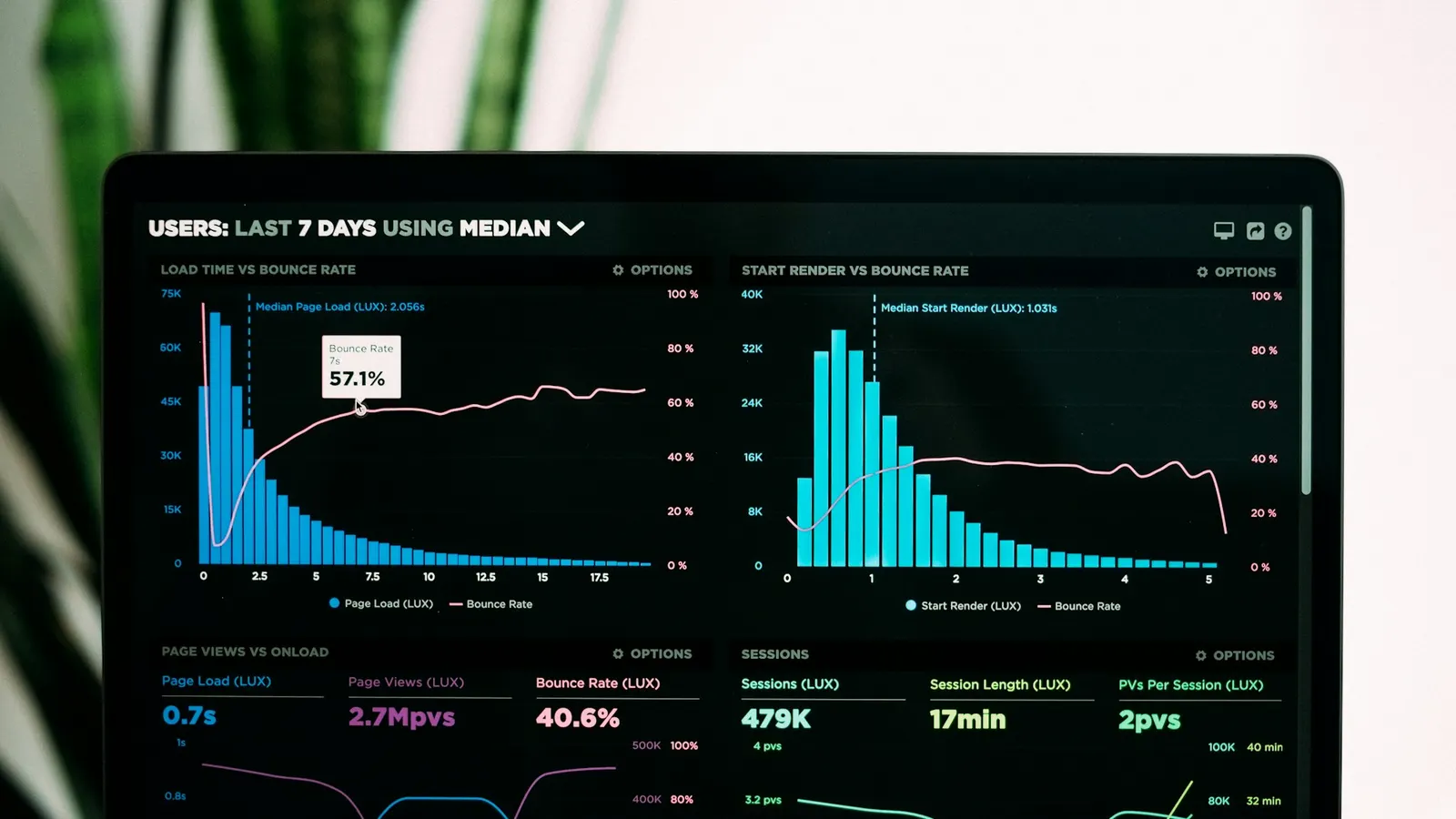
Use the Performance report, filtered by country and device, to track impressions, clicks, position and click-through rate by query and page. Review the Page indexing and Core Web Vitals reports monthly.
GA4 and your CRM
In GA4, mark form submissions, calls, WhatsApp clicks and purchases as key events and report organic landing pages against them. Then close the loop in your CRM: which organic leads became customers, and at what value. That number justifies the budget.
Realistic timelines
These are estimates, driven by your domain’s history, competition, technical starting point and publishing consistency. Technical fixes can show results within weeks of recrawling. New content on less competitive topics typically ranks within two to four months. Competitive commercial keywords usually take 6 to 12 months or more. Anyone promising the top spot by a specific date is guessing.
We rank pages for the questions customers actually ask, in the words they actually use, not the words we wish they used.
A 90-day SEO plan for Saudi businesses
Timings are estimates and depend on the size and state of your site.
| Period | Focus | Key actions | Deliverables |
|---|---|---|---|
| Days 1–30 | Foundations | Verify Search Console and GA4, define key events, technical audit, fix indexing blockers, bilingual keyword map by intent, clean up Google Business Profile | Audit, keyword map, working tracking, baseline |
| Days 31–60 | Priority pages | Rewrite or create your top 5–10 commercial pages in both languages, hreflang, structured data, Core Web Vitals fixes at template level, review-request process | Fast, optimised service and product pages |
| Days 61–90 | Content and authority | Publish 4–8 in-depth articles answering sales questions, strengthen internal links, start two or three link-earning initiatives | First content cluster and a 90-day report against the baseline |
After 90 days the work is not finished, but you will know what is working and where to focus next. If you want a team to run this plan with you, our digital marketing and SEO team starts with a review of your Search Console data and a prioritised list of fixes. Tell us about your site and your goals.
أسئلة وأجوبة
01How long does SEO take to show results in Saudi Arabia?
It depends on your domain's history, competition in your niche, your technical starting point and how consistently you publish. Technical fixes can show results within weeks, new content on less competitive topics usually starts ranking within two to four months, and competitive commercial keywords typically need 6 to 12 months or more of steady work.
02Should I target Arabic or English keywords in Saudi Arabia?
For most consumer-facing sectors in Saudi Arabia, Arabic is the priority, while English still matters for some B2B, technology and expatriate audiences. Check how your real queries split in Search Console, and give each language its own pages written for its readers rather than literal translations of the other version.
03Do Google Ads improve my organic rankings?
No. Spending on Google Ads does not directly affect organic rankings. Ads do, however, quickly reveal which keywords bring real customers, which is valuable for prioritising SEO and content. Many companies start with ads to capture demand immediately and build SEO in parallel to reduce their reliance on paid traffic over time.
04Do I need local SEO if I have no shop or branch?
If you serve customers in specific cities, yes. Google Business Profile lets service-area businesses hide their address and define the areas they serve instead. Consistent name and phone details, genuine reviews and city pages with real substance still decide whether you appear in map results for local searches.
05How should I evaluate an SEO agency's proposal?
Ask about deliverables, not hours: what will be audited, which pages will be written or improved, and how results will be measured in leads rather than traffic. Be wary of guaranteed first-page rankings, cheap link packages and machine-translated content. Keep full ownership of your Search Console and GA4 accounts so the data stays yours.
حوّل هذا الدليل إلى خطة.
أخبرنا أين تقف اليوم، وسيرسم فريقنا معك الخطوات التالية — بدءًا من Digital marketing.
الطريقة الأسرع
عندك سؤال؟ اسألنا على الواتساب.
أخبرنا بما تخطط له وسيوجهك فريقنا إلى الشخص المناسب — دون تعبئة أي نموذج.
نرد عادةً خلال دقائق في أوقات العمل.
More guides for you
كل الأدلة A Digital Marketing Plan with Measurable ROI: A Gulf GuideHow to build a digital marketing plan whose return you can measure: unit economics, Gulf channel roles, budgets, tracking, seasonal peaks and a monthly report template.
 تصميم موقع طبي احترافي: من أول زيارة إلى حجز الخدمةهل يصل المريض إلى خدمتك بسهولة عندما يبحث عنها؟ تصميم موقع طبي احترافي يعرّف الناس بعيادتك، يسهّل اختيار الخدمة والحجز، ويمنح مشروعك حضورًا رقميًا جديرًا بالثقة. ما المقصود بتصميم موقع طبي؟ تصميم موقع طبي هو بناء تجربة…
 ما هو السيو التقني؟ دليلك لتحسين موقعك وتصدر نتائج البحثقد تمتلك محتوى ممتازًا وتصميمًا جذابًا، لكن الأخطاء التقنية قد تمنع موقعك من الظهور. فما هو السيو التقني، وكيف يساعدك على الوصول إلى عملائك؟