






What Is SEO? The Complete Guide to Search Engine Optimisation
Why do some websites top Google while yours stays out of sight? Learn what search engine optimisation (SEO) is, how it works and how it helps your business grow and reach more customers.

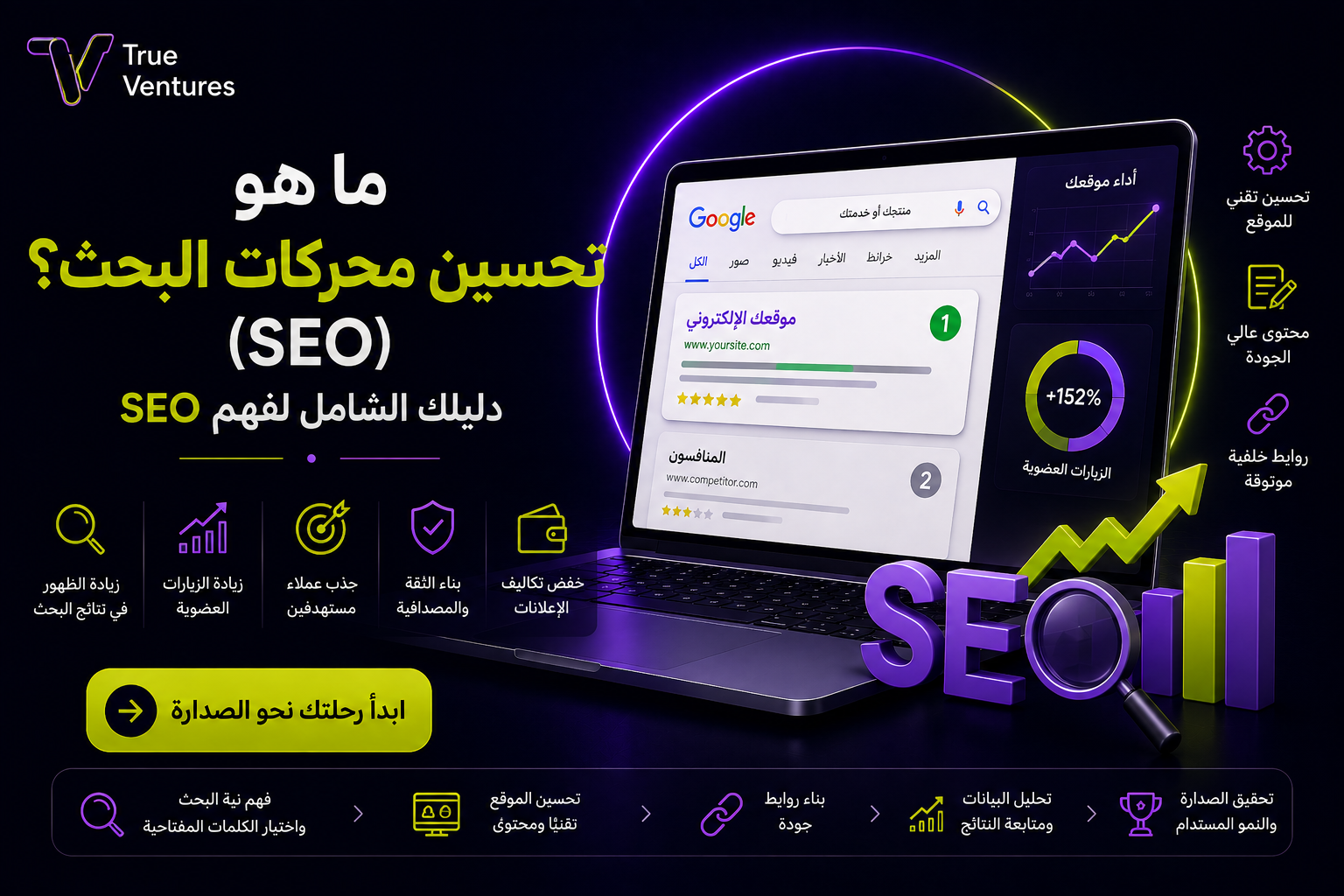
What is SEO, and why do some websites appear at the top of Google while yours stays out of your customers’ sight? This guide explains search engine optimisation and how it helps your business grow and reach further.
What Is SEO?
Search engine optimisation, or SEO, is a set of practices and strategies that prepare your website to rank highly in free (organic) search results whenever people search for products, services or information related to your business.
SEO goes far beyond adding keywords to your content. It covers site structure, page load speed, user experience (UX), content quality, internal and external links, mobile compatibility, and the technical factors that help search engines understand and index your pages.
Put simply, SEO helps your website give users the right answer at the right moment, clearly, quickly and credibly. The more useful and easy to use your site is, the better its chances of appearing in front of potential customers.
How Do Search Engines Work?
To understand what search engine optimisation is, you first need to know how search engines work. Getting a page into the search results involves three core stages:
Crawling Your Website’s Pages
Search engines use automated programs known as spiders or crawlers to discover new and updated pages. These crawlers move from page to page through links, so a well-organised site with sound internal linking makes your content easy to find.
Indexing Your Content
Once a page is discovered, search engines analyse its content, headings, images, links and subject. They then store this information in a huge database called the search index.
If a page is blocked, duplicated, extremely slow or lacks clear content, it may struggle to get into the index or to rank well.
Ranking the Results
When a user types a search query, search engines try to show the most relevant and useful results. Rankings depend on many factors, most notably:
- How relevant the content is to the search query.
- The quality and clarity of the information.
- The website’s expertise and trustworthiness.
- How easy the page is to use.
- Site speed and mobile compatibility.
- The quality of the links pointing to the website.
- The user’s location and the context of the search.
That is why a successful SEO strategy has to combine strong content, technical optimisation and a real understanding of audience behaviour, instead of focusing on a single factor.
Why Is Search Engine Optimisation Important?
SEO matters more every year because customers rely on Google to find products and services and compare their options before buying. Ranking highly gives your business the chance to reach these customers at the exact moment they are looking for what you offer.
The main benefits of SEO are:
More Targeted Traffic
SEO is not about attracting just any visitors. It brings in the people who are searching for your services or products, which makes that traffic far more likely to turn into enquiries or orders.
Greater Trust in Your Brand
Appearing consistently in search results strengthens your brand’s presence and signals expertise and credibility to your audience, especially when your pages offer clear answers and useful content.
Stronger Sales and Growth
When a customer lands on a page that matches their need, loads quickly and is easy to browse, they are much more likely to contact you or complete a purchase. SEO can therefore become a sustainable channel that supports your sales.
Long-Term Results
Optimised content can keep attracting visitors for a long time, especially with ongoing monitoring and updates. SEO takes time, but its cumulative results make it a powerful investment.
A Better User Experience
Many SEO requirements match what users need anyway: fast pages, clear navigation, well-organised content and mobile compatibility. Optimising your site for search engines therefore improves your customers’ digital experience too.
Types of Search Engine Optimisation
SEO is made up of complementary types, and stable results cannot come from relying on just one of them.
On-Page SEO
This covers the improvements made within your website’s pages, such as:
- Writing content that meets search intent.
- Placing keywords naturally.
- Structuring headings and subheadings.
- Optimising the page title and meta description.
- Writing descriptive alt text for images.
- Strengthening internal links.
- Making content easier to read.
On-page SEO helps both search engines and users understand what a page is about and find the information they need quickly.
Technical SEO
This focuses on your website’s technical foundations and how easily search engines can access and index its pages. It includes improving speed, fixing broken links, organising the sitemap, enabling a secure connection (HTTPS), improving mobile compatibility and preventing duplicate pages.
A website can have excellent content, yet technical errors can stop it from reaching the positions it deserves.
Off-Page SEO
This is about building your website’s reputation beyond its own pages, mainly by earning quality backlinks from trusted, relevant websites. It also includes growing your brand’s reach and earning mentions in the right digital sources.
The strength of backlinks is not measured by their number alone: quality, relevance and credibility matter far more than lots of links from weak sources.
Local SEO
Local SEO helps businesses that target a specific city or area appear in front of nearby customers. It includes optimising your business listing, keeping contact details consistent, managing reviews, and creating content and pages that target the right locations.
E-Commerce SEO
This focuses on optimising online stores, product pages and categories, dealing with duplicate content and improving search and navigation within the store. Its aim is to attract users with a clear intent to compare or buy.
What Are Keywords?
Keywords are the phrases users type into search engines to find information, a service or a product. Examples include what is search engine optimisation, “SEO company” and “SEO services in Saudi Arabia”.
Choosing keywords is not about search volume alone; you also need to analyse the intent behind each term. Search intent usually falls into four types:
- Informational intent: the user wants to understand a topic or get an answer.
- Commercial intent: the user is comparing services or companies before deciding.
- Transactional intent: the user is ready to order a service or buy a product.
- Navigational intent: the user is looking for a specific website or brand.
Keywords should be used naturally in the page title, introduction, subheadings, body text and image descriptions. Overusing them can weaken your content and spoil the reader’s experience.
SEO vs SEM: What Is the Difference?
Both terms describe reaching your audience through search engines, but they work in different ways.
SEO focuses on improving your website’s visibility in the free results through content, technical optimisation, user experience and building credibility. It takes time and ongoing effort, but it builds a digital presence that grows over time.
By contrast, SEM usually refers to paid search marketing, where a company pays for its ads to appear when people search for specific keywords. Ads can deliver traffic quickly, but your visibility lasts only as long as your budget does.
You do not always have to choose between them. A company can use ads to hit immediate goals while investing in SEO to build a sustainable source of traffic and support long-term growth.
Why Does Your Website Need a Professional SEO Service?
Having a website does not guarantee that customers will find it. A site may look attractive yet deliver no real value if it never appears in front of the right audience. This is where an SEO service becomes a core part of your digital growth strategy.
A professional SEO service analyses where your website stands, maps the competition in the search results, uncovers opportunities, identifies the keywords your customers actually use, and then improves your pages, content and technical foundations according to one coherent plan.
Ongoing monitoring also helps you spot pages that are slipping, improve click-through and conversion rates, and develop content based on real data. The goal is not a temporary ranking but a website that can compete and support your business goals.
Practical SEO Tips for Your Website
Understand Your Audience Before You Write
Identify the problems your customers are trying to solve, the questions they ask and the language they use when searching. Successful content starts with your audience’s needs, not with repeating keywords.
Create Content That Delivers Real Value
Write clear, comprehensive answers and avoid filler and repeated information. Readers should leave the page with a better understanding or a practical step they can take.
Optimise Your Page Titles
Give every page a clear title that describes its content and includes the main keyword naturally. Your meta description should also be compelling and encourage users to visit the page.
Improve Your Website Speed
Compress images, cut unnecessary files and use an efficient technical setup. Slow pages hurt user satisfaction and can drive visitors away before they even see your content.
Make Your Website Mobile-Friendly
Text should be clear, buttons easy to tap and menus well organised on small screens. Mobile compatibility is no longer an optional extra; it is essential to your website’s success.
Use Internal Links Wisely
Link related pages together to help users continue their journey through your site, and to help search engines understand how your topics connect and how value flows between pages.
Fix Technical Errors
Keep an eye on unindexed pages, broken links, redirects and duplicate content. Fixing these issues gives search engines clearer access to your website.
Track Your Results and Refine Your Plan
Monitor keyword rankings, organic traffic, click-through rate, user behaviour and the number of enquiries or sales coming from search. SEO is an ongoing process built on measurement and improvement.
Start Climbing the Search Results With True Ventures
SEO is not a set of random tweaks. It is a complete journey that starts with understanding your business, your market and your audience, and turns that understanding into a plan you can execute and measure. The earlier you start building a strong website and trusted content, the better your chances of reaching customers and achieving sustainable growth.
At True Ventures, we deliver digital growth services with a methodology that combines technical expertise, data analysis and a deep understanding of user experience and business goals. Your website’s visibility cannot be separated from the quality of its foundations, so we treat your project as an integrated digital ecosystem that needs analysis, development, testing and continuous improvement.
Whether you are launching a new website or improving an existing one, the True Ventures team will help you uncover growth opportunities, improve your customers’ experience and build a strong presence in the search results. Talk to True Ventures today and turn your website from a simple online shopfront into a powerful channel for winning customers and expanding your business.
Questions and answers
01What is search engine optimisation in simple terms?
It is the process of improving a website's content, structure, user experience and technical factors to increase its chances of appearing in free search results in front of its target audience.
02How long does SEO take to show results?
It depends on the website's condition, the strength of the competition, the domain's age, content quality and the scale of technical issues. Early signs usually appear gradually, while strong results require ongoing work.
03Can you rank on Google without content?
It is difficult to build lasting visibility without useful content, because search engines need pages that explain what the website is about and answer users' questions.
04Is SEO free?
Organic visibility does not require paying for every click, but running a successful strategy takes expertise, tools, content, technical improvements and ongoing monitoring.
05Are keywords alone enough to improve rankings?
No, they are only one part of the strategy. Success also depends on content quality, site speed, user experience, technical optimisation and credibility.
06What is the difference between on-page and off-page SEO?
On-page SEO happens within the website itself, such as optimising content, headings and internal links. Off-page SEO focuses on strengthening the website's credibility and reputation through quality signals and links.
07Do new websites need SEO?
Yes, and it is best applied from the moment the website is built. Early planning helps create the right structure and avoid technical mistakes that can be hard to fix once a large number of pages have been published.
08Why do I need a specialist SEO company?
Because SEO combines analysis, content, technical work, user experience and performance tracking. A specialist company such as True Ventures helps you manage all these elements within one unified strategy that serves your business goals.
Turn this guide into a plan.
Tell us where you are today. Our team will map the next steps with you.
The quickest way
Have a question? Ask us on WhatsApp.
Tell us what you are planning and our team will point you to the right people — no form to fill in.
We usually reply within minutes during working hours.