






Online Store Requirements in Saudi Arabia: A Compliance Guide
Opening an online store in Saudi Arabia is a real opportunity, but success starts with compliance. Learn the registration, verification, payment and tax requirements before you launch.

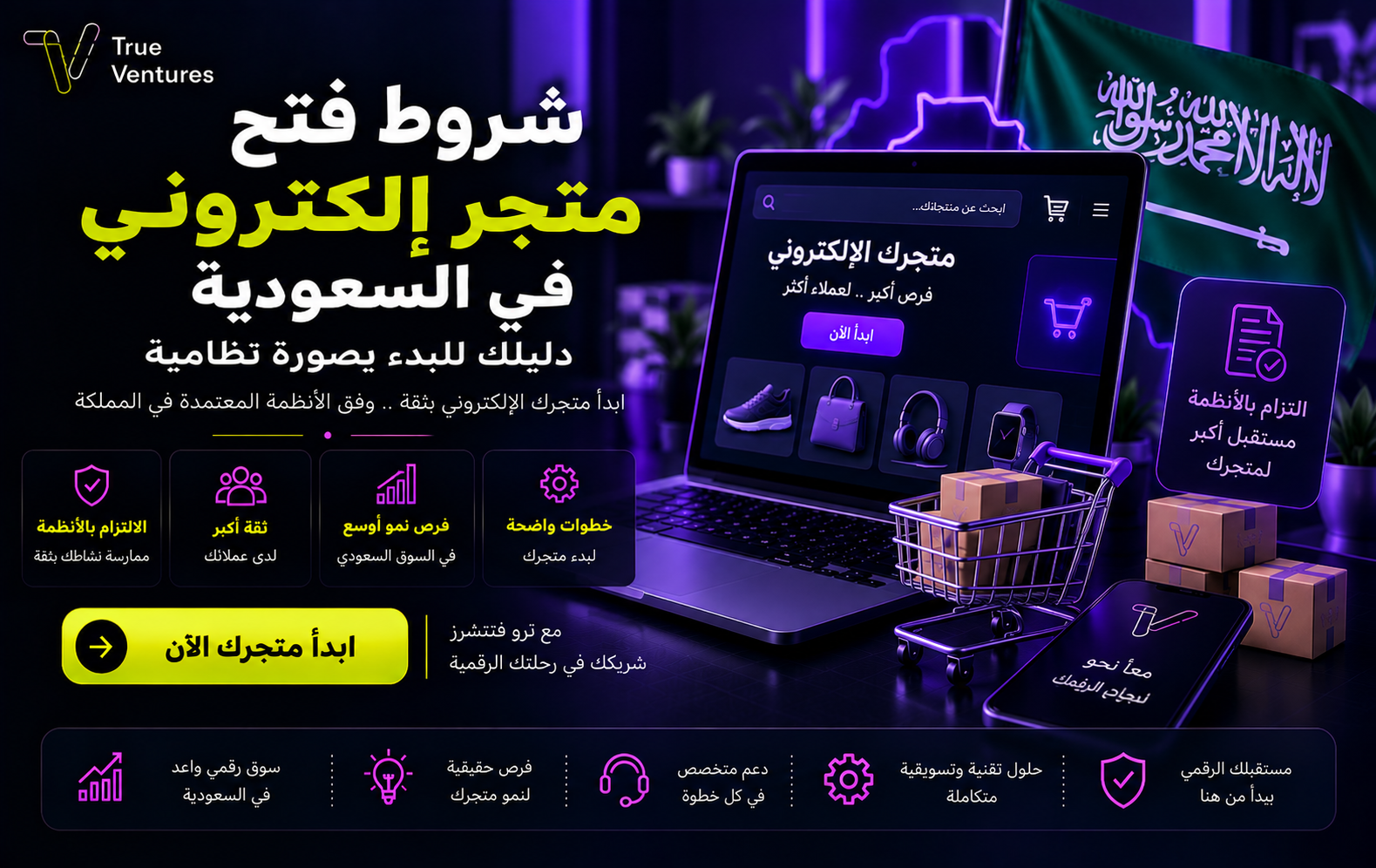
Opening an online store in Saudi Arabia has become an attractive opportunity, but its success starts with compliance. Get to know the requirements for registration, verification, payments and tax before you launch your business in the Kingdom.
E-commerce in the Kingdom is growing fast, driven by the spread of digital services and steady advances in payment and delivery solutions. Even so, an attractive store design and a full product catalogue are not enough to start selling. Your business must be set up on a proper legal footing, display the required information and policies, and protect customer data.
This guide gives you a practical walkthrough of the key requirements to open an online store in Saudi Arabia, covering what applies to Saudi citizens, residents and non-Saudi investors. Some procedures differ depending on the activity, the products and the legal status of the owner, so always check the latest official requirements before you submit any applications.
Requirements to Open an Online Store in Saudi Arabia
Setting up a store starts with identifying the business owner, their legal status and the type of products or services they will offer. Some commercial activities can be registered directly, while activities such as food, health, education or tourism need additional approvals from the relevant authorities.
The core requirements usually include the following:
1. The Right Legal Entity
The store owner needs an official document that allows them to carry out the activity, such as a Commercial Registration (CR), or a Freelance Certificate where the activity is covered by it and the applicant meets its conditions.
A Commercial Registration is the best fit for businesses that plan to expand, hire a team, deal with suppliers and other companies, or run more than one activity. A Freelance Certificate is not a general alternative that suits every activity or every applicant.
2. Choosing the Right Business Activity
The registered activity must reflect the nature of the products or services you offer. If your store combines different activities, you may need to add the relevant activities or obtain separate licences for some of them.
3. Verifying Your Store Online
Verifying your store through the dedicated government service helps prove that the store is linked to its legal entity and strengthens customer trust. Verification usually requires a valid Commercial Registration or professional document, a bank account linked to the business and accurate store details.
4. Displaying Store Information Clearly
Customers must be able to find the service provider’s name, contact details, address and relevant legal information easily. Before an order is completed, the store should also make clear the total price, any additional fees, taxes where applicable, payment options and delivery times.
5. Publishing Legal and Operational Policies
Your store needs a clear exchange and returns policy, terms of use, a privacy policy, a shipping and delivery policy and a complaints procedure. These texts must be easy to understand and accessible on mobile without forcing customers to hunt for them.
6. Protecting Customer Data
You should collect only the data you need, explain why you use it and protect it from unauthorised access. If your store relies on payment, shipping or cloud service providers, data sharing with them must be organised in line with personal data protection requirements.
7. Tax Compliance and Invoicing
VAT registration becomes mandatory once your annual taxable revenue exceeds the mandatory threshold of SAR 375,000. Voluntary registration is also available once you meet its statutory thresholds.
When a business is subject to VAT and e-invoicing, invoices must be issued and stored in line with the applicable requirements. VAT should never be charged to customers without proper registration.
Requirements to Open an Online Store in Saudi Arabia for Non-Saudis
Legal residency alone does not automatically give a resident the right to trade in their own name. That is why the requirements to open an online store for non-Saudis differ from the usual procedures for a Saudi citizen.
If the business is owned by a non-Saudi investor, the owner may need an investment registration under the Investment Law, followed by establishing the legal entity and issuing the Commercial Registration and required licences. Conditions, documents and any ownership or capital requirements vary depending on the activity and its legal classification.
The procedures may include:
- Defining the economic activity and confirming it is open to investment.
- Obtaining investment registration or approval where it applies.
- Establishing a company in the appropriate legal form.
- Issuing the Commercial Registration and adding the correct activities.
- Opening a bank account in the business’s name.
- Registering with the zakat and tax authority where the conditions apply.
- Obtaining licences for products or services subject to special regulation.
- Verifying the store and linking it to the legal entity.
- Complying with labour, employment, consumer protection and data requirements.
It is not permitted to run a store in a Saudi citizen’s name while the management, profits and actual control belong to someone else in breach of the regulations, as this may fall under commercial concealment (tasattur). The right solution is to choose a clear investment and legal route that protects everyone involved.
GCC nationals, Premium Residency holders and other groups with special status may be subject to different routes and requirements. That is why it is wise to establish the owner’s status and the activity before developing the store or signing long-term contracts.
Steps to Open an Online Store in Saudi Arabia
To launch an organised business and avoid rework, follow this sequence:
- Define your store idea: choose your products, your target audience and the value that sets your business apart, then test demand, competition and pricing.
- Choose your operating model: decide whether you will hold stock or rely on suppliers, and how you will manage orders, delivery and customer service.
- Decide your legal status: choose between a sole proprietorship, a company or an available professional route, based on the nature of the activity and the owner’s eligibility.
- Obtain registrations and licences: issue the core legal document, then secure any additional approvals your products or services require.
- Open a business bank account: separating personal and business funds makes it easier to manage cash flow, keep accounts and receive payments.
- Choose your domain name and technology platform: prioritise ease of use, fast browsing, security, scalability and the ability to integrate with other systems.
- Prepare your store policies: write your terms of sale, privacy, returns and shipping policies in clear language that fits the nature of your business.
- Integrate payments and shipping: choose reliable solutions, and test successful payments, refunds, fee calculation and shipment tracking.
- Verify your store: complete verification using legal details that match your business records.
- Test the buying journey: place a test order on a phone, from choosing a product all the way to receiving the invoice and shipping confirmation.
- Launch and monitor performance: track conversions, abandoned carts, payment issues, page speed and customer complaints.
Challenges Residents May Face When Opening an Online Store
Choosing the right legal route is the first challenge, especially when residency is confused with the right to commercial investment. Business owners may also struggle to identify the correct activity classification or the additional licences they need.
Other challenges include:
- Preparing foreign company documents and having them attested or translated where needed.
- Meeting investment registration requirements for the specific activity.
- Opening a bank account and completing verification procedures.
- Contracting with payment gateways and service providers.
- Managing tax, invoices and accounting records.
- Complying with employment and labour requirements.
- Understanding Saudi consumer behaviour and expectations around payment and delivery.
- Building a fast, mobile-friendly Arabic platform.
You can reduce these challenges by starting with a legal and technical review before any development begins, creating a list of the approvals you need, and setting an operating, technology and marketing budget that covers at least the first few months.
Types of Online Stores You Can Open in Saudi Arabia
There are several models to choose from, depending on your experience, capital and audience:
Physical Products Store
Sells clothing, homeware, electronics and more. It requires inventory management, shipping, returns handling and quality packaging.
Digital Products Store
Offers files, templates, software or digital content. Storage costs are low, but it needs content protection and licence management.
Services and Bookings Store
Suits consultations, maintenance, training and professional services. It needs an appointment calendar, a payment system, notifications and a clear cancellation policy.
Subscription Store
Delivers a product or service on a recurring basis for a recurring fee. Its success depends on the quality of the experience, customer retention and how easy it is to manage a subscription.
B2B Store
Serves businesses with custom pricing or offers and bulk orders. It may need integration with inventory, accounting and customer relationship management (CRM) systems.
Multi-Vendor Marketplace
Brings several sellers together on one platform. It is a more complex model because of the need to manage vendors, commissions, payments, complaints and contractual responsibilities.
Why E-Commerce Matters in Saudi Arabia
E-commerce gives businesses the chance to reach customers across every region of the Kingdom without relying entirely on traditional branches. It also gives them data that reveals their best-selling products, traffic sources and customer behaviour.
E-commerce is in step with the Kingdom’s digital transformation journey, supporting new business models and connecting stores with payment, shipping, inventory and marketing services. That is why an online store is no longer just an extra channel; it can become a fully integrated hub for sales, customer service and growth.
What Are the Benefits of Opening an Online Store in Saudi Arabia?
The key benefits include:
- Reaching customers around the clock.
- Expanding geographically at a lower cost than opening multiple branches.
- Measuring campaigns, orders and visitor behaviour accurately.
- Personalising offers to customer interests.
- Automating invoices, inventory and notifications.
- Testing new products quickly.
- Connecting sales to a CRM or ERP system.
- Building a digital asset that can grow and evolve.
Achieving these benefits, however, requires solid technical foundations. A slow store, a complicated checkout or weak security can turn a growth opportunity into a negative experience that damages customer trust.
E-Commerce Requirements in Saudi Arabia for Residents
The most important e-commerce requirements in Saudi Arabia for residents come down to one principle: you must operate through a legal status that allows the activity, not on the basis of residency alone.
Depending on their situation, a resident or investor needs to make sure of:
- A sound legal right to own and operate the business.
- Obtaining investment registration where needed.
- Establishing an entity and issuing a Commercial Registration with the correct activity.
- Obtaining the necessary sector licences.
- Using bank accounts and payments linked to the business.
- Verifying the store and displaying its genuine details.
- Complying with consumer protection and personal data rules.
- Applying tax and e-invoicing requirements.
- Avoiding any form of commercial concealment.
This information is general guidance and is no substitute for reviewing the official requirements or getting legal and tax advice suited to the owner’s nationality, the type of activity and the company structure.
Launch Your Online Store with True Ventures
Meeting the requirements to open an online store in Saudi Arabia is the foundation, but success also takes a fast, secure and scalable platform, and a buying experience that earns customers’ trust and lets them complete their order with ease.
True Ventures helps companies and entrepreneurs move from idea to a fully operational digital product: from analysing the business model and requirements, through user experience (UX) design, store development and integration with payments, shipping and CRM and ERP systems, all the way to testing, launch and data-driven optimisation.
True Ventures is built on a Saudi investment vision, regional technical expertise and rigorous methodologies for analysis, design, development and security. Its ISO 9001, ISO 27001 and ISO 20000-1 certifications reflect its commitment to process quality, information security and IT service management.
If you are planning to launch a new store, or need to upgrade your current store into a more efficient platform, talk to True Ventures about building an online store that supports your goals today and is ready for your business’s growth tomorrow.
Questions and answers
01Does an online store in Saudi Arabia need a Commercial Registration?
The business needs a proper legal basis. A Commercial Registration is required for many businesses, while a Freelance Certificate may be suitable only for certain activities and eligible groups.
02Can a resident open an online store in their own name in Saudi Arabia?
Residency alone does not grant the right to trade. You must choose a legal route that allows ownership and the activity, which may require investment registration, establishing a company and a Commercial Registration.
03Is online store verification mandatory in Saudi Arabia?
Official verification helps prove the store is linked to the business and strengthens customer trust. Check its requirements and apply them according to your entity and activity.
04Do I need an extra licence to sell products online?
It depends on the type of product. Some regulated activities, such as certain food, health and education products, need sector approvals before you can sell.
05What information must an online store display?
Your store should display the service provider's details and contact information, product descriptions, prices, fees and taxes, payment and delivery terms, and your privacy, returns and complaints policies.
06What is the most important technical step before launching an online store?
Testing the full buying journey on a phone, including page speed, payment, invoice issuing, order confirmation, refunds, and the shipping and inventory integrations.
07Can I launch an online store and get the licences later?
It is best to complete the legal requirements and necessary licences before you start selling. Launching early can expose the business to legal and operational problems and weaken customer trust.
Turn this guide into a plan.
Tell us where you are today. Our team will map the next steps with you.
The quickest way
Have a question? Ask us on WhatsApp.
Tell us what you are planning and our team will point you to the right people — no form to fill in.
We usually reply within minutes during working hours.