






Marketing vs Sales: Key Differences and How They Boost Profits
Great product, busy sales team, yet sales still fall short? Learn the real difference between marketing and sales, and which one your company needs first.

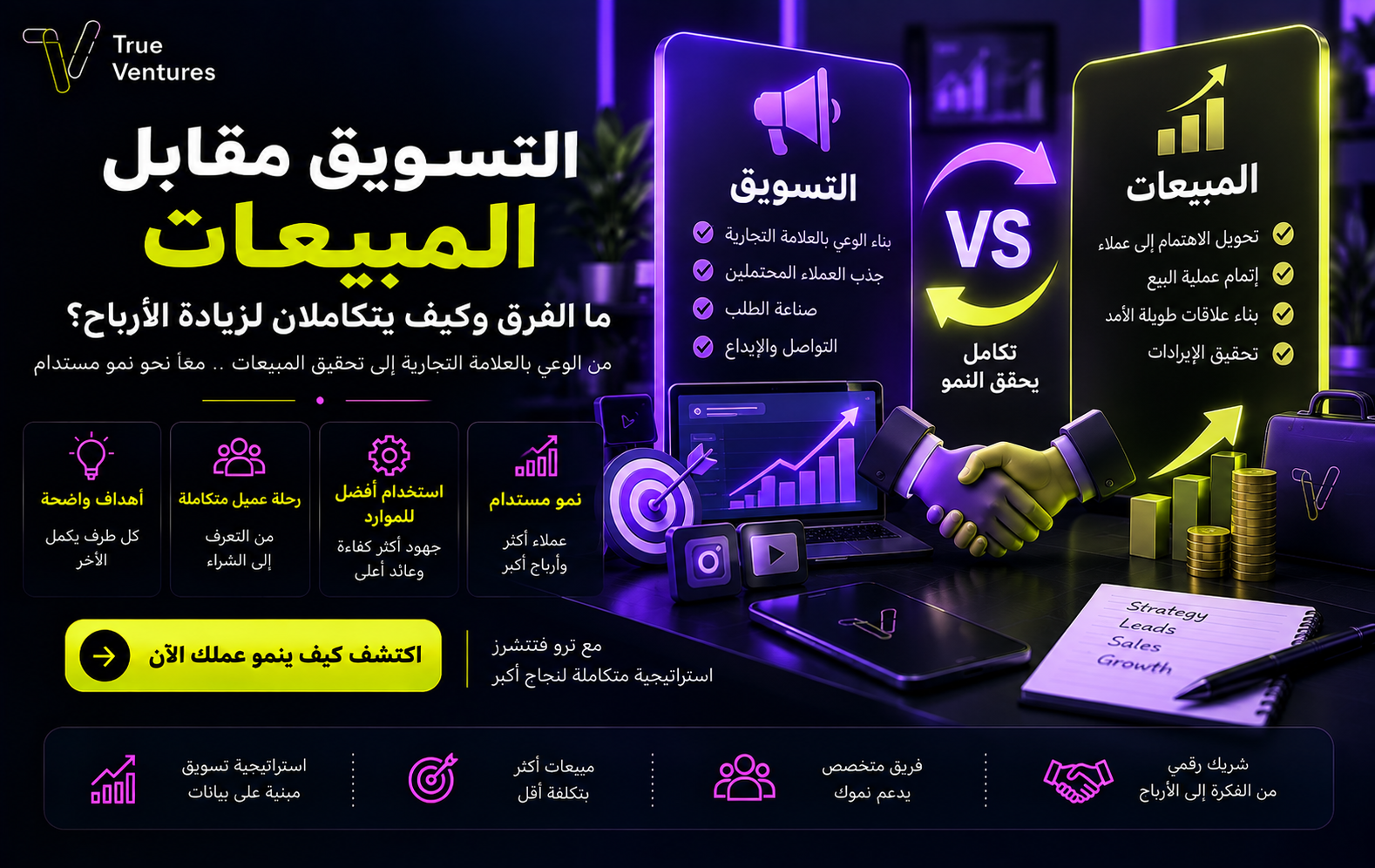
Your company may have an excellent product and still miss its sales targets. You may have an active sales team that struggles to reach qualified customers. That raises the question at the heart of marketing vs sales: what is the difference between the two, and which one does your company need first?
The truth is that marketing and sales are not competing functions but two connected stages of the same journey. Marketing works to understand the market, build awareness and attract potential customers, while sales turns that interest into buying decisions and real revenue.
In this guide, we explain marketing vs sales, how to align the two, the right time to build each team, and the most common mistakes that can stop your company from achieving sustainable growth.
What Is the Difference Between Marketing and Sales?
The core difference between marketing and sales lies in the goal of each and the stage of the customer journey it works on.
Marketing is the set of activities that helps a company study the market, understand its audience’s needs, define its target segments, build its brand image and then generate interest in its product or service. It can include content marketing, search engine optimisation (SEO), digital advertising, email and social media management.
Sales, on the other hand, is the process of engaging directly with a potential customer to understand their needs, present the right solution, handle their objections, negotiate, close the deal and then nurture the business relationship.
Think of marketing as farming: it chooses the right land, plants the seeds and gives them the care they need. Sales is the harvest, turning all that earlier effort into tangible results.
| Comparison Point | Marketing | Sales |
| Goal | Build awareness and generate demand | Turn interest into purchases |
| Audience | A broad group of potential customers | A specific customer or sales opportunity |
| Communication style | Mass and mostly indirect | Direct and personal |
| Time frame | Medium to long term | Short to medium term |
| Metrics | Traffic, engagement, leads | Deals, revenue, close rate |
| Focus | The market, the brand and the customer journey | Individual needs and the buying decision |
Despite these differences, neither one delivers its best results in isolation from the other.
How Marketing and Sales Work Together to Increase Profits
Alignment begins when both teams agree on who the ideal customer is, the problem the product solves and the message to deliver at each stage of the buying journey.
Marketing attracts the right audience through content, campaigns and user experience, then gathers lead data and scores leads by level of interest and readiness to buy. Qualified opportunities are then passed to the sales team to start a more personalised conversation.
But collaboration does not end when the lead is handed over. The sales team holds first-hand knowledge of customers’ questions, objections and the reasons they accept or reject offers. When that data flows back to marketing, it can be used to improve content, targeting accuracy, landing pages and marketing offers.
To build this alignment in your company:
- Agree on one definition of a qualified lead: both teams need to know when a customer is ready to move to the sales stage.
- Use a central customer management system: a CRM helps you record lead sources, track conversations and see what stage each customer has reached.
- Agree on shared metrics: marketing should not celebrate traffic numbers that never turn into real opportunities, and sales cannot be judged without considering lead quality.
- Hold short, regular meetings: discuss opportunity quality, recurring objections, campaign results and the reasons deals are lost.
- Map content to the stages of the customer journey: customers first need educational content, then a clear comparison, and finally an offer or consultation that helps them decide.
When this collaboration works, customer acquisition costs fall, opportunity quality rises, the sales cycle shortens, and both conversion and customer retention rates improve.
When Does Your Company Need a Marketing or Sales Team?
There is no single answer for every company; the choice depends on the nature of the product, its price, the length of the buying cycle and the size of the market.
You Need Marketing When:
- Your audience does not know your brand or services.
- You are struggling with low traffic and few enquiries.
- You are entering a new market or launching a new product.
- You need to build trust before asking customers to buy.
- You want to generate steady demand instead of relying on personal relationships.
- You need to understand audience behaviour and test messages and offers.
You Need Sales When:
- Leads are reaching you but not turning into buyers.
- Your product needs explaining or a demo.
- Deal values are high or the buying process is complex.
- There are objections that need to be handled one-to-one.
- You target companies or organisations that expect negotiation and tailored solutions.
- You need structured follow-up on your current opportunities.
In the early stages, one person may handle both functions, but as the company grows, a clear split of responsibilities becomes essential. More important than team size is a connected process that shows where each customer came from, how they are qualified, who follows up and how the result is measured.
Inbound vs Outbound Sales: What Is the Difference?
Inbound and outbound sales are two different ways of reaching customers and closing deals.
Inbound Sales
In inbound sales, the customer starts the interaction after seeing your content, searching for a solution, filling in a form or requesting a consultation. At this point the customer is already aware of their need to some degree, so the conversation focuses on uncovering the details and offering the right solution.
Its advantages include:
- A higher level of interest.
- Easier personalisation based on customer behaviour.
- Better opportunities to build trust.
- Greater efficiency when backed by a strong content strategy.
Success, however, takes time, useful content, clear digital pages and an effective system for qualifying and following up with leads.
Outbound Sales
In outbound sales, the company reaches out to potential customers first through calls, professional messages or direct offers. This approach is used especially when the target group is well defined or when the company wants to enter a new market.
Its advantages include:
- Fast access to specific sectors.
- Control over the type of accounts you target.
- Direct testing of markets and offers.
- A good fit for business-to-business (B2B) deals.
The main challenge is that the customer may not be ready to buy, so outreach must be well thought out, personal and offer clear value rather than relying on pressure.
The best approach is usually to combine the two: marketing builds a steady channel for attracting customers, while outbound sales targets accounts of strategic value.
Common Mistakes in Understanding Marketing vs Sales
Treating Marketing as Just Advertising
Advertising is only one tool. Marketing starts with market research, choosing the audience, defining the value proposition, building the brand identity and improving the customer experience, and only then choosing the right channels.
Expecting Instant Results from Marketing
Some campaigns deliver quick wins, but building trust and consistent visibility takes time, testing and refinement. Stopping marketing too early can waste the data and effort you have built up.
Expecting Sales to Convince Every Customer
Not every lead is a good fit for your company. Sending weak opportunities to sales wastes time and lowers the close rate. Leads should be qualified by need, budget and decision-making authority.
Measuring the Two Teams on Separate Numbers
More leads do not mean success if their quality is low, and weak sales may be the result of inaccurate targeting. It is better to track the whole journey, from first interaction to revenue.
Not Sharing Data
When each team keeps its information to itself, mistakes repeat and opportunities slip away. Record lead sources, objections, sales cycle length and the reasons deals are won or lost.
Using One Message for Every Customer
A start-up founder’s needs are different from those of a large enterprise. So segment your audience, and tailor the content, offer and communication style to each segment.
How to Build a More Efficient Marketing and Sales System
Start by mapping the customer journey from the moment they discover their problem through to purchase and beyond. Identify the touchpoints, who owns each stage and the information the customer needs to move to the next step.
Next, connect your marketing channels to a customer relationship management system and set clear criteria for scoring opportunities. Track metrics such as customer acquisition cost, conversion rate, sales cycle length, average deal value and customer retention rate.
And do not neglect the digital user experience: a strong campaign can fail because of a slow website, a complicated form or an unclear message. Technology, marketing and sales are all parts of one growth system, and weakness in any of them affects the final result.
Turn Your Marketing and Sales Efforts into Real Growth with True Ventures
Understanding marketing vs sales is not a theoretical exercise; it is a fundamental step in building a company that can attract customers and turn them into lasting business relationships.
True Ventures helps companies and organisations build digital systems that connect technology with growth: from analysing the business model and user experience, through developing websites, platforms, mobile apps and CRM and ERP systems, to digital growth services and data-driven optimisation.
With its Saudi investment vision, regional technical expertise and an end-to-end methodology covering analysis, design, development, testing and follow-up, True Ventures turns ideas into secure, scalable products that are ready to operate.
If your company attracts interest without enough sales, has a sales team that needs a more efficient system, or is looking for a digital platform that supports the entire customer journey, it is time to take a practical step. Talk to True Ventures about building a digital solution that turns your marketing and sales efforts into measurable, scalable growth.
Questions and answers
01Is marketing or sales more important?
Neither is more important in absolute terms. Marketing creates awareness and generates opportunities, while sales turns those opportunities into revenue. Successful companies need a balance that suits their business model.
02Can one team handle both marketing and sales?
Yes, in small businesses. But as operations grow, responsibilities need to be split. Separating the functions gives each one sharper focus, provided both share goals and data.
03What is the difference between a lead and a sales opportunity?
A lead is a person or organisation that has shown initial interest. A sales opportunity is a lead that has been qualified, with a confirmed need, the means and a realistic readiness to move towards a purchase.
04Can digital marketing replace a sales team?
Simple purchases can happen entirely through digital channels, but complex or high-value products usually need human contact, tailored offers and direct negotiation.
05How do I know if my company has a marketing problem or a sales problem?
If enquiries are few or the audience is the wrong fit, the problem is usually marketing. If enquiries are plentiful and qualified but deals are not closing, review your sales process, offers and follow-up.
06What is the most important metric for marketing and sales alignment?
The rate at which qualified leads convert into deals is one of the most important metrics, along with customer acquisition cost, sales cycle length and the revenue generated by each channel.
07How does a CRM help improve sales and marketing?
A CRM brings customer data, interaction history and deal stages into one place, helping marketing sharpen its targeting and enabling sales to follow up in an organised way and make data-driven decisions.
Turn this guide into a plan.
Tell us where you are today. Our team will map the next steps with you.
The quickest way
Have a question? Ask us on WhatsApp.
Tell us what you are planning and our team will point you to the right people — no form to fill in.
We usually reply within minutes during working hours.