





On-Page SEO: A Practical Guide for Websites and Online Stores
Great content that never shows up on Google? On-page SEO makes your pages easier to understand, easier to rank and better at attracting visitors who are ready to buy.

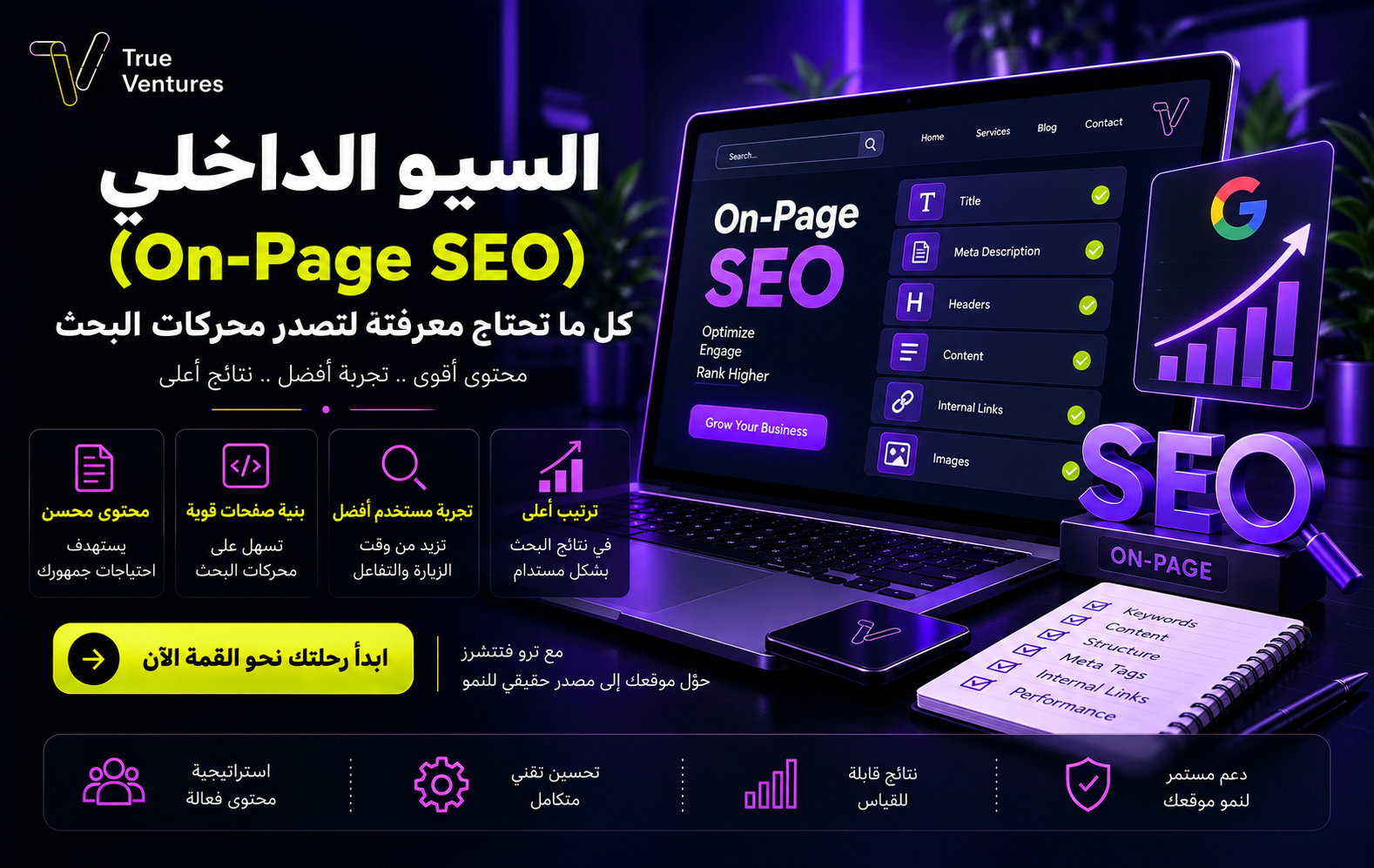
You have good content, but it never shows up in search results. On-page SEO is how you fix that: it sharpens every page on your website or online store, makes it easier for search engines and visitors to understand, and attracts qualified traffic that actually supports your growth.
Why SEO Matters for Websites and Online Stores
Showing up in search results is no longer optional if you want to reach customers at the right moment. When people need a product or service, they usually start on a search engine and compare the results before they buy or get in touch.
Search engine optimisation builds a lasting digital presence, so you are not entirely dependent on paid advertising. The better your website, its content and its user experience, the more often it appears in front of people who are genuinely interested in what you offer.
For websites and online stores, SEO delivers:
- More targeted traffic from search results.
- Access to users with a real interest in your product or service.
- Stronger customer trust in your brand.
- A steady flow of sales and enquiries.
- A smoother browsing experience and faster access to information.
- Lower customer acquisition costs over the long term.
- Better visibility for your product and service pages.
- Support for expanding across the Saudi market and the wider region.
None of this comes from repeating keywords. It starts with a clear, well-structured page that answers what the user is really looking for and gives them genuine value. That is where on-page SEO plays its central role.
What Is On-Page SEO?
On-page SEO is the process of optimising the content and elements inside your website’s pages so that search engines understand what each page is about, while visitors enjoy a useful, effortless experience.
It covers the page title, meta description, headings and subheadings, content quality, keyword placement, images, alt text, internal links and page URLs.
The goal is not simply to please search algorithms. A successful page is written for the user first. That is why effective on-page SEO combines clarity, accurate information, good structure and easy reading.
When someone lands on a page about on-page SEO, they should grasp the topic quickly, find well-organised answers to their questions and move on to related content easily, without filler or distractions.
Why Is On-Page SEO Important?
On-page SEO shows search engines how a keyword relates to the content on the page. When a page is well organised and complete, it becomes far easier to identify its topic and show it to the right users.
Helping Search Engines Understand Your Page
Search engines rely on the title, subheadings, body text and links to work out what a page covers. Organising these elements properly clarifies the context and the concepts connected to your keyword.
Ranking for the Right Searches
When your content clearly addresses search intent, it is more likely to appear in front of people looking for the information or services your page offers, instead of attracting visitors with no interest.
Improving User Experience
Short paragraphs, clear headings and well-organised lists make content easier to read, especially on mobile. The faster visitors find their answer, the more likely they are to stay and engage with your site.
Driving Conversions and Sales
On-page SEO is not only about more traffic. It guides users towards the next step, whether that is requesting a consultation, buying a product, reading about a related service or filling in your contact form.
Making Your Pages Easier to Index
Internal links and a clear structure help search engines discover new pages and understand how they relate to one another. This matters most for large websites and online stores with many categories and products.
The Most Effective Ways to Improve On-Page SEO for Websites and Online Stores
Improving on-page SEO means carrying out a set of connected steps, because no single element makes a page succeed on its own.
1. Identify Search Intent
Before you write a word, understand what the user actually wants. Are they trying to learn a concept? Compare solutions? Buy a product? Contact a specialist company?
Matching the type of content to search intent lets you give the right answer. Informational keywords call for explanations and examples, while commercial keywords call for clear benefits, selection criteria and an obvious way to get in touch.
2. Choose a Primary Keyword
Pick a primary keyword that precisely describes the page’s topic, then define supporting keywords and related synonyms. In this article, on-page SEO is the primary keyword, while the supporting terms include page optimisation, on-site SEO, internal links and content optimisation.
Use these terms naturally, without irritating repetition or forced sentences. The quality of your answer and the coherence of the topic matter far more than keyword density.
3. Write a Compelling Page Title
The page title is one of the most prominent elements users see in search results. Ideally it includes the primary keyword, makes the benefit of the content clear and stays short enough to avoid being cut off wherever possible.
A good title is specific and honest, free of exaggeration, and different from the titles of every other page on your site.
4. Optimise the Meta Description
The meta description is a short summary that explains what the page offers and encourages people to click. It does not directly guarantee higher rankings, but it can make your result more appealing and lift your click-through rate.
Include the keyword, a clear benefit for the reader and persuasive wording, and keep it to a suitable length.
5. Structure Your Headings and Subheadings
Use one clear main heading per page, then divide the content with logically ordered subheadings. This structure lets users scan the article quickly and helps search engines understand its main themes.
Avoid using headings just to make text bigger, or jumping between heading levels at random.
6. Publish Comprehensive, Original Content
Successful content is not measured by word count alone, but by how well it answers the question and covers everything the user needs. It should be accurate, well organised, written in plain language and free of unnecessary repetition.
Back up your explanations with practical examples, lists, short comparisons and answers to frequently asked questions.
7. Optimise Your Product Pages
In online stores, avoid short or duplicated descriptions across large numbers of products. Every product page needs a clear name, an original description, accurate specifications, practical benefits, optimised images and the information customers need to decide.
It also helps to link each product to the right category and add related products so shoppers keep browsing.
8. Optimise Images and Alt Text
Large images can slow your page down, so compress them and choose the right dimensions before uploading. Use descriptive file names and add alt text that describes each image accurately.
A good example of alt text:
Diagram showing the key elements of on-page SEO for websites
Do not stuff alt text with keywords or use a description that does not reflect what the image shows.
9. Create Clean, Clear URLs
A page URL should be short, easy to understand and related to the topic of the content. Avoid unnecessary symbols, overly long URLs and addresses that keep changing.
10. Add Useful Internal Links
Internal links connect related pages and help visitors discover more information. An article on on-page SEO, for example, can link to pages on search engine optimisation, content writing and online store optimisation.
Use descriptive anchor text that tells users where the link will take them, instead of generic phrases such as “click here”.
11. Improve Readability
Keep paragraphs fairly short, use lists where they help, leave comfortable white space and choose a font size that works on phones. Avoid complex sentences and long introductions that delay the answer.
12. Review and Update Your Content
Over time, some pages lose their accuracy or their competitive edge. Review the information regularly, refresh your examples, fix broken links and develop any sections that no longer meet visitors’ needs.
On-Page vs Technical vs Off-Page SEO: What Is the Difference?
The different types of SEO work together, but each one has its own scope:
| Type | Focus Area | Examples |
| On-page SEO | Page elements and content | Headings, keywords, images, internal links |
| Technical SEO | Structure, performance and accessibility | Loading speed, mobile-friendliness, crawling and indexing |
| Off-page SEO | Reputation and signals from outside the website | Earned backlinks and brand mentions |
In short, on-page SEO focuses on the quality of each page and how well it matches search intent, while technical SEO is about how efficiently search engines and users can access and use the website. Off-page SEO strengthens the site’s credibility and reach through signals that come from other sources.
You cannot rely on one of these and ignore the others. A page can have excellent content yet stay unindexed because of technical problems. A website can be fast, yet its content is weak and fails to answer what users are looking for.
A Step-by-Step Plan to Improve On-Page SEO on Your Website
Put a practical plan in place to improve your website’s pages with these steps:
- Set a primary keyword and a clear goal for every page.
- Review the results your audience searches for and understand what type of content they expect.
- Write a direct main heading that includes the primary keyword naturally.
- Create a compelling meta description that reflects the page content.
- Answer the main question at the start of the content, without a lengthy introduction.
- Break the topic into connected subheadings.
- Use synonyms and related concepts without keyword stuffing.
- Add internal links only to pages that genuinely help.
- Optimise images and add accurate alt text.
- Check how the page looks and works on a phone.
- Add a clear call to action for the right next step.
- Track page performance and refine the content based on the results.
Service pages should explain the problem, the solution, the stages of the work and the value the client receives. Articles should deliver a complete answer and guide the reader to related topics or the right service, without turning into a sales pitch from the first line.
What Are Outbound Internal Links?
Outbound internal links are the links you place on a page to send users to another page on the same website. They are “outbound” because they leave the current page, yet they stay within the same domain.
For example, an article about on-page SEO can point readers to your SEO service page or to an article explaining keywords. Links like these help you:
- Make it easy for users to move between pages.
- Show how topics relate to one another.
- Help search engines discover your content.
- Distribute authority across your website’s pages.
- Reduce orphan pages that no links point to.
- Steer visitors towards the right services or products.
Do not confuse them with outbound external links, which take users to a different website.
To get the most out of internal links, keep them relevant to the paragraph they sit in, vary your descriptive anchor text and avoid adding so many that they distract the reader. Check them regularly to make sure none point to deleted pages.
Help Your Website’s Pages Rank Higher and Grow Further
On-page SEO is not a set of cosmetic tweaks. It brings together an understanding of your audience, quality content, well-organised pages and a better user experience. Done thoughtfully, it helps your website or online store attract traffic that is more relevant to your business and turn it into real growth opportunities.
At True Ventures, we see digital visibility as one part of an integrated growth system. We start by analysing your business and your audience’s needs, then develop your content, pages and user experience around a clear vision that links technology to commercial results.
If you want to improve your website’s pages, raise the quality of your content and build a digital presence that can compete in the Saudi market, talk to True Ventures. Let our team help you turn your website from a simple online front into an effective platform that drives reach, engagement and growth.
Questions and answers
01What is on-page SEO in simple terms?
On-page SEO is the optimisation of your website's page content and elements, such as headings, meta descriptions, images, keywords and internal links, so that both users and search engines can understand each page.
02Does repeating a keyword improve rankings?
No. Excessive repetition can weaken the quality of your content. It is better to use the primary keyword and its synonyms naturally while giving a useful, complete answer.
03How many times should I use a keyword on a page?
There is no fixed ratio that suits every page. Include it in the important places where it fits naturally, such as the title, the introduction, some subheadings and the body content.
04Is on-page SEO suitable for online stores?
Yes, and it is essential. It improves category and product pages, organises internal links, strengthens descriptions and images, and helps customers find the right products.
05What is the difference between an internal link and an external link?
An internal link takes the user to another page on the same website, while an external link takes them to a different website or domain.
06Is website speed part of on-page SEO?
Website speed belongs mainly to technical SEO and user experience, but it affects how your pages perform and complements your work on content and on-page elements.
07Is it enough to optimise a page once?
No. User needs, competing content and page performance all change over time, so your pages need ongoing monitoring, updates and improvement.
08How long does on-page SEO take to show results?
It depends on the current state of your website, the competition, content quality, any technical issues and your site's existing authority. Improvement usually comes through continuous work rather than an instant result.
09Why should I hire a specialist SEO company?
Because improving visibility means analysing keywords, pages, content, technical structure and user experience, then turning that data into an integrated plan that supports your business goals instead of making random changes.
Turn this guide into a plan.
Tell us where you are today. Our team will map the next steps with you.
The quickest way
Have a question? Ask us on WhatsApp.
Tell us what you are planning and our team will point you to the right people — no form to fill in.
We usually reply within minutes during working hours.