





The Importance of Digital Marketing for Businesses in 2026
A great product is no longer enough to win customers; competition now starts on the screen. Discover why digital marketing is the key to turning attention into sustainable growth and sales.

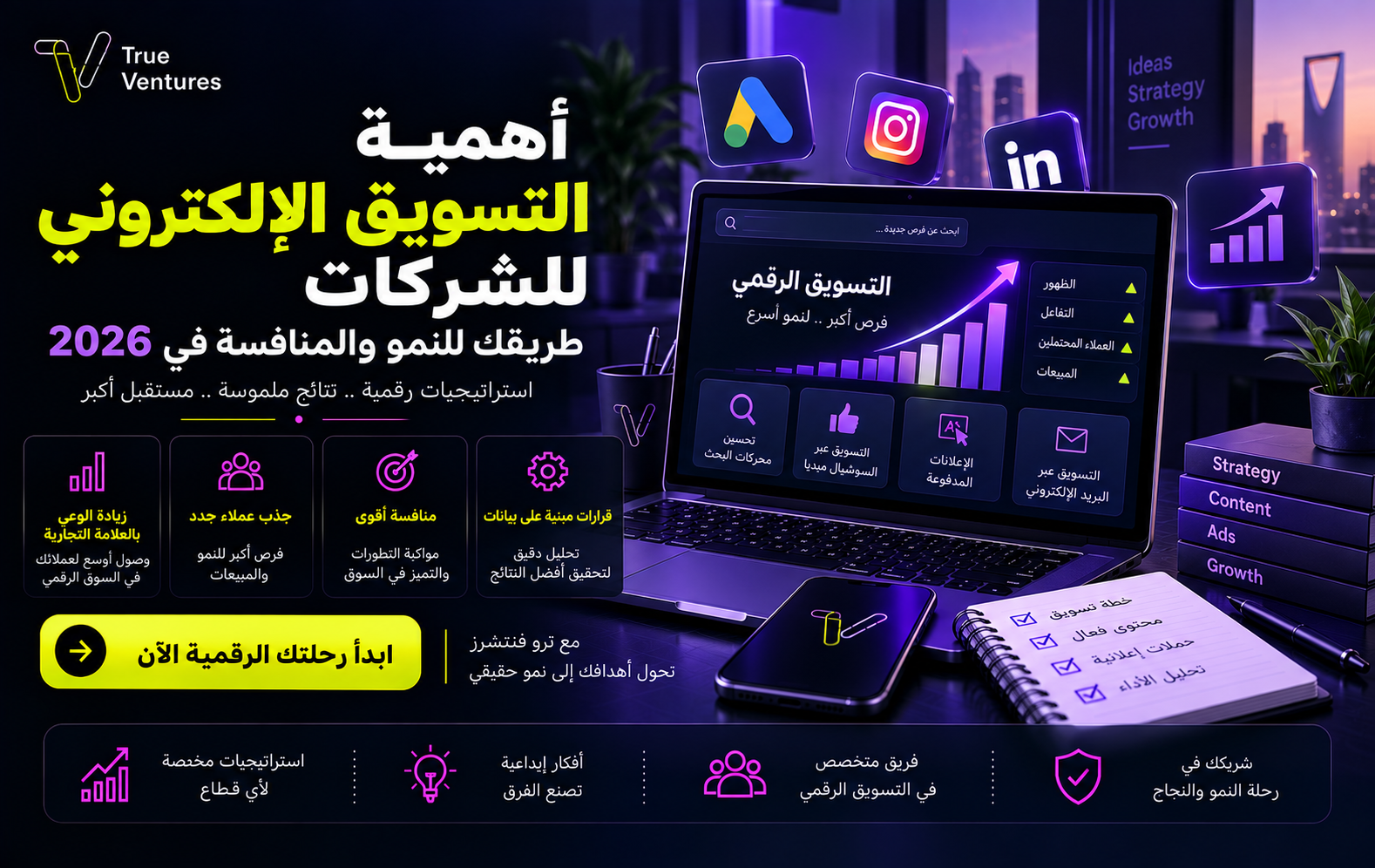
A great product alone is no longer enough to win customers, because competition now starts on the screen. This is where the importance of digital marketing for businesses comes in: it turns your audience’s attention into sustainable growth and sales. Today’s customers make a large share of their decisions online. They search, compare, read reviews and follow content before they ever contact a company or buy a product. So the question is no longer whether your company needs digital marketing, but how to use it in a way that delivers measurable results and gives you a real edge in the market.
What Is Digital Marketing?
Digital marketing is the use of digital channels and platforms to introduce your brand, reach potential customers, build relationships with them and turn their interest into purchases or contact requests.
Digital marketing is not limited to posting on social media or launching a sponsored ad. It covers an integrated system of activities, such as:
- Improving your website’s visibility in search engine results (SEO).
- Content marketing and articles.
- Social media management.
- Paid digital advertising.
- Email marketing.
- Improving user experience (UX) and landing pages.
- Analysing data and visitor behaviour.
- Retargeting people who have shown interest in your service.
- Automating the customer journey and connecting it to customer relationship management (CRM) systems.
The real power of this system shows when the channels work together within a clear strategy. A customer might discover your company through an article, then see an ad, visit your website and compare services before sending a request or making a buying decision.
How Digital Marketing Revolutionised Business
Before the internet became widespread, companies relied heavily on channels whose impact was hard to measure accurately, such as print ads, billboards and TV commercials. The message reached a broad audience, but with no detailed knowledge of who saw it or engaged with it.
Digital marketing changed that equation completely. Companies can now speak to a specific segment based on location, age, interests, buying behaviour and professional activity. It has also become possible to follow the customer journey from the very first interaction all the way to the completed order.
This revolution shows in three major shifts:
From Guesswork to Data
A business can know its visitor numbers, traffic sources, most engaging pages, customer acquisition cost and conversion rate. This information supports realistic decisions instead of decisions based on gut feeling.
From Generic Messages to Personalisation
There is no longer any need to send the same message to every customer. You can design content and offers that match the needs of each segment, which increases the likelihood of engagement and conversion.
From Short-Lived Campaigns to an Always-On Presence
A website and SEO-friendly content give your company a continuous presence. A useful article or an optimised service page can keep attracting leads months after it was published.
Why Is Digital Marketing Important Today?
The importance of digital marketing lies in its ability to combine reach, targeting, measurement and engagement in a single system. Here are its key benefits for businesses:
1. Fast, Precise Access to Customers
You can target your audience by location, interests, needs and digital behaviour. This helps you show the right message to the right person at the right time.
But effective targeting starts with understanding the customer, not just choosing ad settings. Identify their problems, the questions they ask and the factors that influence their decision, then build your marketing messages around them.
2. Lower Costs and Better Returns
Digital channels let you start campaigns with flexible budgets, then direct your spending towards the activities that deliver the best results. A weak ad can be paused or reworked quickly, instead of continuing to spend without a clear view.
That does not mean digital marketing always delivers instant results. Sustainable results need a strategy, good content, a strong user experience and continuous measurement.
3. More Sales and Business Opportunities
Digital marketing helps you attract customers at different stages of the buying journey. Some are looking for information, some are comparing solutions, and others are ready to get in touch or buy.
When your company provides the right content for each stage, it shortens the distance between a customer’s interest and their decision. That is how visits turn into opportunities, and opportunities into sales.
4. Building Your Brand and Trust
A consistent presence with useful content and a coherent identity keeps your brand front of mind for your audience. Over time, your company starts to move from being just one available option to becoming a trusted authority in its field.
Trust grows when your website is fast and clear, your services are explained accurately, your messages are consistent and your communication with customers is professional.
5. Direct Engagement and Loyalty
Digital platforms let you receive questions and feedback and respond quickly. The value of this communication goes beyond closing a sale: recurring comments and enquiries help you discover customer needs and improve your services.
Every interaction is an opportunity to understand the market and build a long-term relationship, not just a passing conversation.
6. Measurement, Analysis and Continuous Improvement
One of the most important aspects of digital marketing is the ability to tie activities to clear metrics, such as:
- The number of qualified visits.
- Conversion rate.
- Customer acquisition cost.
- Customer lifetime value.
- Return on ad spend.
- Customer retention rate.
- The quality of business opportunities.
These metrics show you what is working, what needs improving and where to invest your next budget.
Why Your Company Cannot Do Without Digital Marketing
If your company is absent from digital channels, that does not mean your customers are absent too. More often, it means they move on to other options that appear in front of them while they search.
Even companies that rely on relationships and referrals need a professional digital presence. A customer who hears about your company will usually look it up before getting in touch. If they find a weak website or incomplete information, they may walk away despite a strong recommendation.
Digital marketing is also not a department separate from the rest of the business. It connects with sales, customer service, product development, user experience, brand identity and technical systems. The better these elements are integrated, the smoother the customer journey becomes and the more likely a prospect is to become a real customer.
For better results, start with these practical steps:
- Set a clear business goal, such as increasing qualified leads.
- Get to know your audience and their real needs.
- Develop a fast, mobile-friendly website.
- Create content that answers your customers’ questions.
- Choose the right channels instead of being everywhere at random.
- Connect your campaigns to measurement and customer management tools.
- Review your results regularly and keep improving the experience.
B2B vs B2C Marketing: Who Wins in 2026?
Neither model wins outright. The winner in 2026 is the model that understands its customers and uses data, content and technology efficiently.
| Element | B2B Marketing | B2C Marketing |
| Audience | Companies and decision-makers | Individuals and consumers |
| Buying cycle | Longer and more complex | Usually shorter |
| Decision | Shared between several stakeholders | Usually individual |
| Message | Value, return and efficiency | Benefit, experience and convenience |
| Content | Case studies, guides and solutions | Videos, reviews and offers |
| Relationship building | Long-term | Fast and repeated |
| Success metrics | Opportunity quality and contract value | Conversion, sales and repeat purchases |
In B2B marketing, customers need clear proof of expertise, delivery capability and expected return. That is why educational content, case studies, specialist pages and organised follow-up of opportunities work so well.
In B2C marketing, ease of purchase, website speed, visual content, reviews, relevant offers and the mobile customer experience matter even more.
In both models, simply producing more content will not be enough. The advantage will go to companies that deliver useful content, a personalised experience and clear messages, respect user data, and connect marketing with sales and customer service.
Start Your Growth Journey with True Ventures
The importance of digital marketing makes one thing clear: growth no longer depends on visibility alone, but on building a digital system that turns brand awareness into trust, trust into engagement and engagement into measurable business results.
At True Ventures, we connect marketing with technology, user experience and digital transformation, because a strong campaign needs a digital foundation that can welcome customers and turn their interest into value. Drawing on regional technical expertise and a Saudi investment vision, we help companies analyse their needs, design their experiences, develop their platforms and build data-driven growth plans.
Whether you want to strengthen your brand’s presence, develop a digital platform, improve your customer experience or build a scalable system, the right starting point is a vision that brings together technology, marketing and business goals.
Talk to True Ventures, and let’s turn your digital presence from scattered activity into a real growth engine that supports your company’s ambitions today and is ready for tomorrow’s opportunities.
Questions and answers
01Why is digital marketing important for small businesses?
It helps small businesses reach a specific audience on a flexible budget, measure results, and build awareness and trust without heavy spending from day one.
02Is digital marketing suitable for every type of business?
Yes, but the channels and strategies differ depending on the type of business, the audience and the buying cycle. What works for an online store may not suit a company that provides technology solutions to enterprises.
03How long does digital marketing take to show results?
It depends on the channel, the goal and the competition. Ads can deliver quick results, while improving search engine visibility (SEO) and building a brand take time and consistency.
04Is social media marketing enough on its own?
No. Social media is an important element, but it becomes far more effective when combined with a professional website, useful content, SEO, analytics and an organised system for following up with customers.
05How do I measure the success of a digital marketing strategy?
Start by setting a business goal, then track the metrics linked to it. If the goal is to increase sales, measuring likes is not enough; you need to track qualified leads, conversion rate, customer acquisition cost and return.
06What is the difference between digital marketing and digital transformation?
Digital marketing focuses on reaching customers, building relationships and increasing demand, while digital transformation covers developing the processes, systems and experiences inside the organisation. The greatest impact comes when the two work together.
07How do I choose the right marketing strategy for my company?
Start by analysing the market, your audience, your product, the competition and the customer journey. Then define your channels, content, budget and KPIs, test the results and refine your strategy based on the data.
08Why do companies need a partner that combines marketing and technology?
Because marketing success depends on website speed, user experience, platform quality and the integration of data and systems. Combining marketing expertise with technical delivery gives a company a more connected customer journey and a greater capacity to grow and scale.
Turn this guide into a plan.
Tell us where you are today. Our team will map the next steps with you.
The quickest way
Have a question? Ask us on WhatsApp.
Tell us what you are planning and our team will point you to the right people — no form to fill in.
We usually reply within minutes during working hours.