








Real Estate Website Design: Build a Platform That Wins Trust and Sales
Are buyers struggling to find the right property? The problem may be how you present it. Professional real estate website design makes searching easy, builds trust and turns visitors into leads.

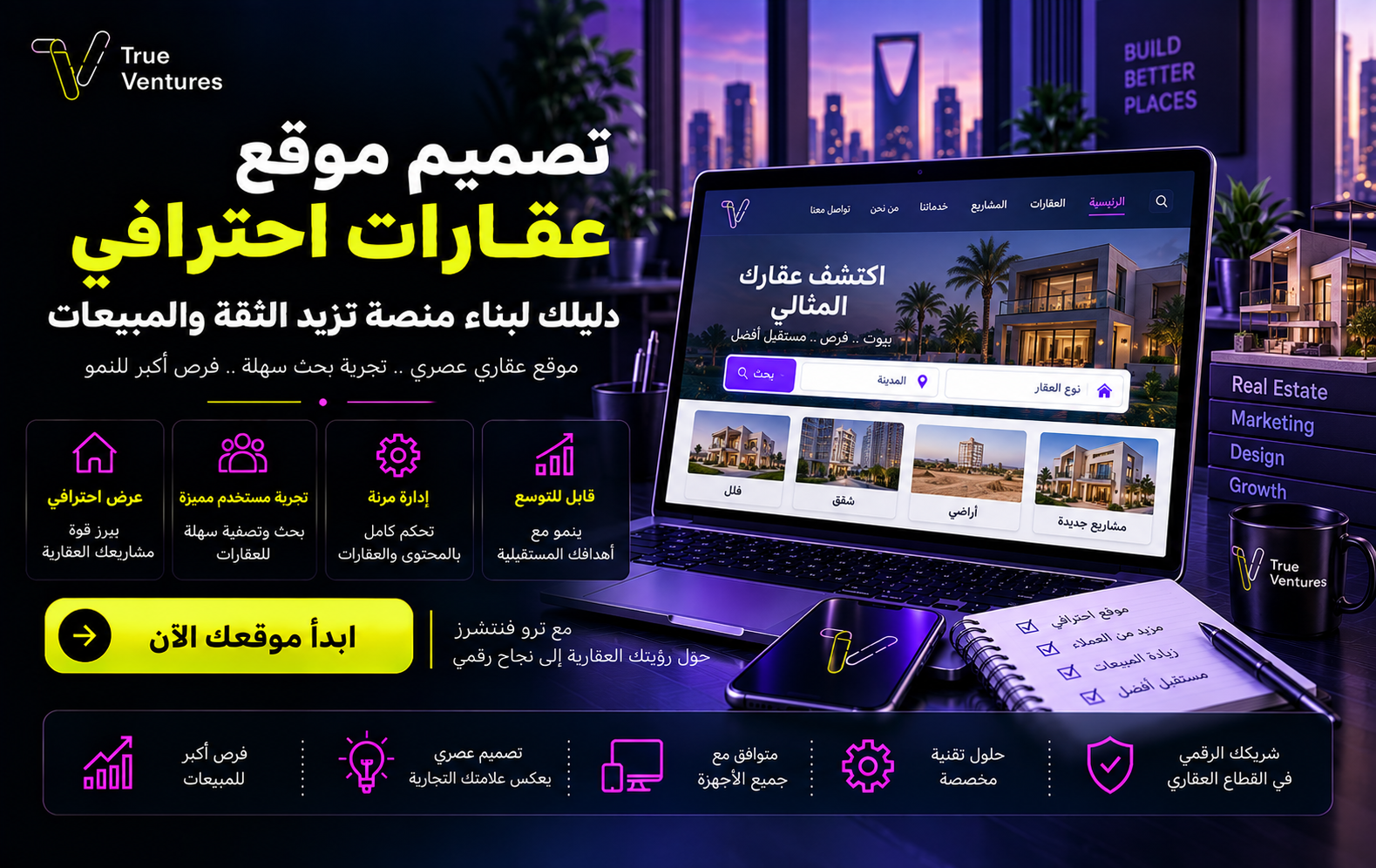
Are your customers struggling to find the right property or compare the options available? The problem may not be your properties, but the way you present them. Professional real estate website design helps you showcase your projects attractively, make searching easy, build trust and turn casual browsers into qualified leads who contact you to take the next step.
What Is a Real Estate Website?
A real estate website is a digital platform dedicated to presenting properties and residential or commercial projects in an organised, easy-to-use way. It can serve property developers, brokerage offices, real estate marketers, property managers and investors.
Its role goes far beyond posting property photos and prices. It works as a digital branch that is open around the clock. Through it, customers can search for a suitable unit, set their budget, location and size, compare results, review the details and then contact your sales team directly.
Successful real estate website design combines an attractive interface, a simple user experience, an accurate search engine and persuasive content, all on a fast, secure and scalable technical foundation.
Why Professional Real Estate Website Design Matters
Today’s buyers start their property search online, well before they visit a project or speak to a sales representative. Your website is therefore a primary touchpoint between your real estate brand and your audience, and the impression it makes can decide whether a customer stays or leaves.
Building Trust in Your Brand
When customers find a well-organised website with clear information, high-quality photos and accurate data, they see you as more credible. Slow pages or missing information, on the other hand, can raise doubts even when the project itself is outstanding.
Reaching Customers Around the Clock
A website lets customers browse units at any time and from anywhere, without depending on your sales team’s working hours. That gives your company a constant opportunity to receive enquiries and requests.
More Opportunities to Sell and Lease
Presenting each property professionally, with clear contact buttons and viewing request forms, reduces the steps between a customer’s interest and actually getting in touch. The shorter and easier the journey, the higher the chance of conversion.
Stronger Visibility in Search Results
Your website lets you target the phrases customers search for, such as properties for sale, apartments for rent, residential villas or real estate projects in a specific city. That requires a sound technical structure, fast pages and useful content, not irritating keyword repetition.
Data That Helps You Improve
You can see which properties get the most views, where your traffic comes from, which pages users leave from and what share of visits turn into enquiries. This data helps you sharpen your marketing campaigns and your presentation and pricing decisions.
What a Real Estate Website Offers Visitors
A website succeeds when it serves the needs of the property seeker, not just the company. Visitors want to find a suitable option with the least time and effort, with enough information to make an initial decision with confidence.
A real estate website gives visitors several important benefits:
- Searching by city or district, property type, price, size and number of rooms.
- Viewing clear property photos and unit floor plans where available.
- Learning about the services, amenities and location.
- Comparing available options instead of jumping between multiple sources.
- Saving favourite properties and coming back to them later.
- Sending an enquiry or viewing request in a few simple steps.
- Browsing the platform easily on a mobile phone.
- Accessing up-to-date listings that cut the time wasted on unavailable properties.
The clearer the information, the better the quality of your leads, because anyone who contacts your sales team has already formed an initial picture of the property and whether it suits their needs.
Essential Elements of a Successful Real Estate Website
Advanced Property Search
Search is the most important part of the real estate website experience. Users should be able to filter results by city, district, price, size, property type, number of rooms and purpose, whether for sale or for rent.
Filters should also be easy to use and require few steps, show the number of results clearly and let users adjust their choices quickly.
Detailed Page for Every Property
Every property needs its own page presenting the key information in a clear order, such as:
- Property name and type.
- Price, or how to request it.
- Location and size.
- Number of bedrooms and bathrooms.
- Property condition and availability.
- Features and nearby services.
- Professional photos and clear floor plans.
- A location map where needed.
- A button to request a viewing or get in touch directly.
Descriptions should be accurate and persuasive, without exaggeration or unrealistic promises.
Fully Mobile-Friendly Design
Many customers search for property on their phones. Images must load quickly, text must be clear, filters must be easy and call and messaging buttons must be visible without zooming in.
Being mobile-friendly does not just mean the page fits on a small screen. It means designing a comfortable journey built for touch, fast browsing and quick decisions.
Direct Contact Options
Your website should include clear buttons for calling or instant messaging, plus a short form for requesting details or booking a viewing. Ideally, each enquiry is linked to the property the customer was viewing, so your sales team knows the source of the request immediately.
Interactive Map
A map helps users understand where a property is and how far it is from schools, hospitals, main roads and surrounding services. It is especially valuable for customers who do not know the area well.
Easy-to-Use Admin Dashboard
The admin dashboard lets you add properties, change prices, update unit status and manage photos and enquiries. It should be flexible enough for your team to use without needing technical help for every change.
Speed and Security
Large images and unoptimised code can slow your website down and drive visitors away. Compress images, optimise the code and use suitable hosting infrastructure, while protecting customer data and running regular backups.
Benefits of Professional Real Estate Website Design
A website designed around the needs of a real estate business delivers a range of practical benefits, including:
- Professional project presentation: showcasing properties with a brand identity that reflects the quality of your brand.
- Organising large numbers of units: grouping properties by type, location, status and price.
- A more efficient sales team: enquiries arrive with the property details and the customer’s needs attached.
- System integration: the option to connect the website to customer relationship management (CRM) or property management systems.
- More effective campaigns: dedicated landing pages for different projects and offers.
- Better decisions: tracking user behaviour to see which units and areas are most in demand.
- Scalability: adding languages, branches, services or a mobile app at later stages.
- A competitive edge: a digital experience that helps your company stand out as more professional in the market.
Tips for Managing Your Real Estate Website Effectively
Keep Property Status Up to Date
Reserved or sold properties showing up among available results frustrate customers and erode their trust. Set up a clear process for regularly updating the status, price and details of every unit.
Invest in Photo Quality
Photos are the first thing that catches a property seeker’s eye. Use bright, clear images that show the real spaces from suitable angles, and avoid heavy editing.
Write Useful Descriptions
Do not settle for generic phrases such as “prime location”. Explain what actually makes the location special, such as being close to a main road, a school or a business centre, and include the information that influences the customer’s decision.
Keep Contact Simple
Reduce the number of fields in your contact forms and ask only for essential details. A name, a phone number and the type of enquiry are usually enough to start the conversation.
Monitor Website Performance
Review your most visited pages, most used searches, customer sources and contact rates. If a property gets plenty of views but no enquiries, it may need better photos, clearer information or a review of its pricing.
Publish Content That Answers Customers’ Questions
Create articles and guides on choosing a property, the buying process, investment, financing and the differences between unit types. Useful content supports your search visibility and strengthens your audience’s trust.
Test Your Website Regularly
Try the search, forms and buttons on different devices. Make sure requests reach the right team, and check page speed and the integrity of your images and data.
Why Choose True Ventures to Design Your Real Estate Website?
A real estate project needs more than an attractive front end. It needs a digital product that serves your sales goals and is built to grow. True Ventures works with a Saudi technology vision focused on enabling digital transformation and building advanced platforms suited to the requirements of the Saudi market.
Our methodology starts by understanding your business model and customers, then analysing and documenting the requirements and designing the user experience and interfaces, before developing a robust, secure and scalable platform. Every project goes through performance, security, load and compatibility testing before launch, followed by training, support and continuous improvement.
True Ventures combines regional technical expertise, an investment mindset and international methodologies in systems development. Its ISO 9001, ISO 27001 and ISO 20000-1 certifications reflect its commitment to quality standards, data protection and IT service management.
Start Building Your Real Estate Platform with True Ventures
Professional real estate website design is an investment in your customer experience, your sales team’s efficiency and the future of your brand. A successful website makes searching easier, presents your projects persuasively, offers direct ways to get in touch and gives management the data it needs to grow.
If you want to turn your idea into a powerful real estate platform that meets your needs today and is ready to expand tomorrow, talk to True Ventures. Our team will study your project and build a digital experience that combines ease of use, quality execution, security and the ability to deliver real results.
Real Estate Website Design: Frequently Asked Questions
How much does it cost to design a real estate website?
The cost depends on the number of pages and properties, the type of search engine, the admin dashboard, the languages required and any integrations with other systems. The exact price is set after studying the project’s scope and functions.
How long does it take to develop a real estate website?
The timeline depends on the size of the platform and the complexity of the features required. Projects usually move through analysis, design, development, testing and launch, and the schedule is set once the requirements are documented.
Can I manage properties without coding experience?
Yes. An easy-to-use admin dashboard lets your team add properties and edit their details, prices, photos and status without touching any code.
Does a real estate website work on mobile phones?
It should be fully responsive on phones and tablets, with optimised images, filters and contact buttons for a fast, comfortable experience.
Can I add more than one language?
Yes. A multilingual website can be developed to reach different customer segments, with the content for each language managed in an organised way.
Can the website connect to a CRM system?
Yes. It can be integrated with a customer relationship management (CRM) system to log enquiries, assign them to your sales team and track the status of every customer.
How does a real estate website help increase sales?
It helps customers find the right property, gives them the information they need and shortens the steps to get in touch, while helping your sales team receive clearer, better-organised requests.
Can the website be developed further in the future?
Yes. When the website is built on a scalable technical architecture, you can add new services, a mobile app, integrations or advanced analytics without rebuilding the project from scratch.
Turn this guide into a plan.
Tell us where you are today. Our team will map the next steps with you.
The quickest way
Have a question? Ask us on WhatsApp.
Tell us what you are planning and our team will point you to the right people — no form to fill in.
We usually reply within minutes during working hours.