





Hotel Booking Website Design: A Guide to Seamless Bookings
Hotel booking website design is about more than room photos. Learn how to build a platform where guests search, compare, pay and get instant confirmation, and how it grows direct bookings.

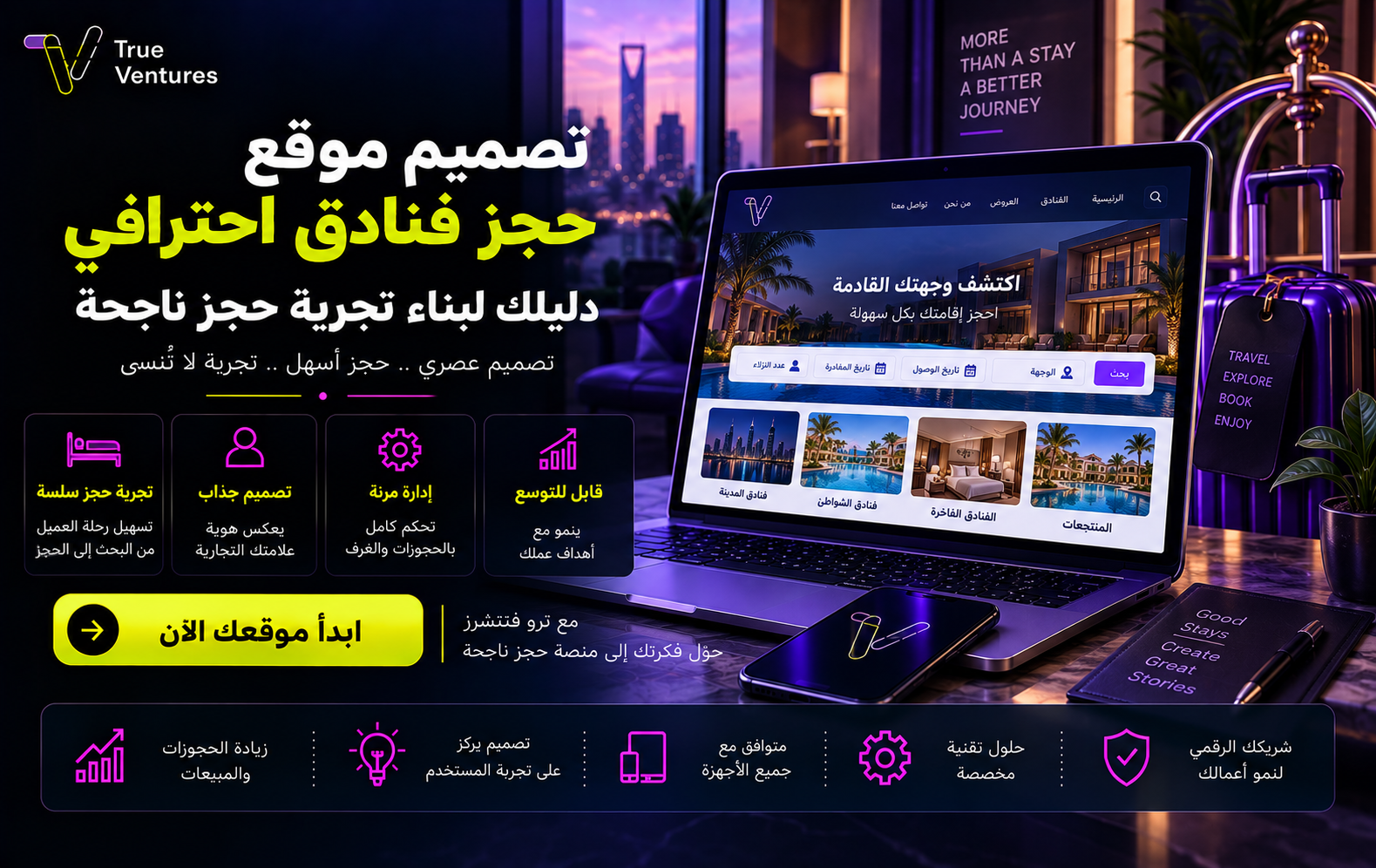
Hotel booking website design is not just about building attractive pages to show off your rooms. It means building a complete platform where visitors can search for the right room, check prices and availability, compare options, pay and receive their booking confirmation easily and securely.
A successful hotel website brings together three core elements:
- A design that reflects the hotel’s identity and the standard of its services.
- A clear, fast user experience on every device.
- A technical system that connects rooms, rates, bookings and payment methods in one platform.
The project should begin with a study of the hotel and its target guests. A family resort has very different needs from a business hotel, serviced apartments or a hotel chain with several branches. This analysis shapes the page structure, the search mechanism, the booking options and the features that need to be built.
Why Hotel Booking Website Design Matters for Your Business
Your website is a direct sales channel that works around the clock. When booking is easy and trustworthy, the hotel can cut the steps that stand between the guest and their decision.
A professional website helps you achieve several business goals:
More Direct Bookings
Your website lets guests book directly with the hotel, giving you greater control over the guest journey, your offers, your rates and your booking data.
Stronger Trust in Your Brand
Many guests judge a hotel’s standard by its website. An organised design, professional photography, accurate information and clear booking policies give visitors confidence before they even arrive.
A Better Guest Experience
The guest experience starts long before check-in. If guests can find the right room, complete their booking and receive confirmation without any hassle, they form a positive impression of your service quality.
Support for Your Marketing Campaigns
Ad campaigns can be directed to dedicated pages for offers, seasons or room types, then measured and refined according to how visitors behave.
Greater Operational Efficiency
Connecting your website properly to your hotel management system keeps availability and rates up to date and reduces manual data entry, errors and double bookings.
Using Guest Behaviour Data to Make Smarter Marketing Decisions
The value of hotel booking website design does not end at launch. Your website can become a constant source of insight that helps management make more accurate decisions.
You can analyse metrics such as:
- The most visited pages and rooms.
- The most searched stay dates.
- The devices your guests use.
- The share of visitors who start a booking but do not finish it.
- Where your traffic and bookings come from.
- The offers with the highest conversion rate.
- The step at which users abandon the booking form.
For example, if many visitors reach the payment page and then drop out, the problem may be limited payment options or unexpected fees. If mobile traffic is high but bookings are low, the mobile interface may need simplifying or a speed boost.
This data helps the hotel refine its offers, reallocate its marketing budget, improve room pages and tailor messages to guests’ interests. Tracking tools must be implemented with privacy in mind and with the necessary consent for data collection.
How to Design a Hotel Booking Website, Step by Step
Building a reliable platform means following clear steps rather than jumping straight into visual design.
1. Analyse the Business Model
The process starts with understanding the number of branches and rooms, guest types, cancellation policies, taxes, currencies, seasonal pricing, payment methods and how bookings are currently managed.
2. Map the Guest Journey
Map the path a user takes from the moment they land on the site to booking confirmation. Every unnecessary step can lower the chance of completion, so the journey should be short and clear.
3. Plan the Site Structure
A hotel website usually includes a home page, a rooms page, details for each room, offers, facilities, location, FAQs, booking policies and a contact page.
4. Design the User Experience and Interfaces
Prototypes are built to show where the search tools, photos, prices and booking buttons sit. After usability testing, the interfaces are designed to match the hotel’s brand identity.
5. Develop the Booking Engine
Development covers availability and rate management, room selection, cost calculation, discounts, guest details, payment and the confirmation message.
6. Integrate With Your Systems
The website may need to integrate with the hotel management system, payment gateways, CRM systems, messaging services, maps or accounting systems.
7. Test and Launch
Test speed, security, payments, confirmation messages, screen compatibility, different booking scenarios and the site’s ability to cope with traffic spikes.
8. Keep Improving
After launch, monitor the data and feedback, fix friction points, and keep improving performance, content and conversion rates.
Essential Features of a Hotel Booking Website
The quality of a booking platform depends on features that serve both guests and management. The most important include:
Advanced Search Engine
It should let guests choose the destination or branch, check-in and check-out dates, number of rooms, and number of adults and children, and show the right results quickly.
Real-Time Availability Calendar
It shows the rooms available for the chosen dates and, when properly connected to your operational systems, helps prevent conflicting bookings.
Detailed Room Pages
Every room needs clear photos, its size, number of beds, amenities, maximum occupancy, price, cancellation policy and any additional terms.
Secure Payment System
Offer payment options that suit your target market, encrypt data and never store sensitive financial information on the website in insecure ways.
Flexible Admin Dashboard
It lets administrators track bookings, update rates and availability, manage offers, edit content, review reports and set user permissions.
Responsive Design
Every function must work smoothly on mobile, tablet and desktop, especially the calendar, the booking form and the payment page.
Multi-Language and Multi-Currency Support
This becomes increasingly important when you target guests from several countries. Translating words is not enough: text direction, dates and currencies must all be adapted to the user.
Notifications and Confirmations
Send a clear confirmation that includes the booking number, dates, room type, cost and policies, with the option to send reminders before arrival.
Vouchers and Offers
Discount codes, stay packages and seasonal offers encourage direct bookings and let you measure the performance of your marketing campaigns.
Security and Backups
Apply security updates, manage permissions, run regular backups, monitor login attempts and test the system’s integrity periodically.
Hotel Website Design With Booking: Bringing Design and Technology Together
Successful hotel website design with booking depends on the interface and the technical foundations working in harmony. A website may look beautiful, but slow room listings or a failing payment step make it ineffective. Equally, a system can be technically powerful while a complicated interface stops users from benefiting from it.
Integration starts with placing the search form prominently, then presenting clear results with price, features and photos. Once a room is selected, show a clear summary of the cost and terms before asking for the guest’s details.
It is also important to:
- Compress images without any noticeable loss of quality.
- Use clear, visually consistent booking buttons.
- Keep required fields to the essential minimum.
- Show errors next to the field, along with how to fix them.
- Keep the user’s data when they go back a step.
- Make the final price clear before payment.
- Provide an easy way to get in touch when guests need help.
- Optimise pages for search engines with structured headings and original content.
This integration turns your website from a brochure into a sales and operations tool that can evolve as your hotel grows.
Why Choose Us to Design Your Hotel Website for a Flawless Booking Experience?
At True Ventures, we do not treat a hotel website as a set of ready-made pages, but as a digital product that must deliver measurable operational and commercial value.
Our methodology starts with analysing your business model and studying the market and users, then documenting the requirements and project scope. From there we move on to designing the user experience, interfaces and interactive prototypes, before developing the system and running performance, security, load and compatibility tests.
True Ventures combines a Saudi investment vision, regional technical expertise and global methodologies for systems analysis, design and development. Our work is backed by a specialist team in project management, user experience and software development.
Choosing True Ventures gives your project several advantages:
- A solution built around your hotel’s nature and goals.
- A user experience designed to drive more bookings.
- A secure, scalable technical build.
- Well-planned integration with the systems and services you need.
- Comprehensive testing before launch.
- Training, support and continuous improvement after go-live.
- Development decisions based on data and guest behaviour.
Our ISO 9001, ISO 27001 and ISO 20000-1 certifications reflect our commitment to process quality, information security and excellence in IT service management.
We do not aim to launch a website that simply works today. We build a platform ready to grow, add features, serve new branches and support your business as it expands.
Conclusion: Turn Your Hotel Website Into a Booking and Growth Channel
Professional hotel booking website design is an investment in guest experience, operational efficiency and revenue growth. Success starts with understanding your guests’ needs, then building an easy booking journey, developing a fast and secure system, and continuing to improve based on data.
If you want to move beyond a conventional website to a complete booking platform that serves your hotel’s goals today and is ready for its expansion tomorrow, the True Ventures team is ready to study your project and turn your requirements into a practical digital solution built to grow.
Talk to True Ventures today and start building a booking experience that makes your hotel easier to reach, strengthens your guests’ trust and turns visits into real bookings.
Hotel Booking Website Design: Frequently Asked Questions
How long does it take to design a hotel booking website?
It depends on the number of pages, languages, integrations and booking engine features. The timeline is set more precisely once the requirements have been analysed and the scope of work prepared.
How much does a hotel website with a booking system cost?
The cost depends on the size of the project, the level of customisation, the payment gateways, the systems to be integrated and the level of support. That is why it is best to prepare a technical and financial proposal based on the hotel’s actual needs.
Can the website connect to my hotel management system?
Yes, the integration can be built if the system offers suitable integration methods. This keeps bookings, rates and availability in sync and reduces manual work.
Does a hotel booking website work on mobile phones?
The design must be fully responsive, because a large share of guests search and book on their phones. That includes making it easy to pick dates, enter details and complete payment.
How can I prevent double bookings of the same room?
By updating availability in real time and connecting the booking engine to your room management system and the channels you use, while carefully testing the synchronisation rules.
Can online payment be added?
Yes. Suitable, secure payment gateways can be integrated, with currencies, refund policies and payment options set according to the needs of the hotel and its target market.
Will the website help my hotel appear on Google?
A sound technical build, fast pages, mobile compatibility, original content, structured headings and image descriptions all improve your visibility. Reaching the top results, however, also requires an ongoing strategy, and no specific ranking can be guaranteed.
Can the website be developed further after launch?
Yes, and it is best built on a scalable architecture from the start, so you can add branches, languages, offers, integrations and new features without rebuilding the entire platform.
Turn this guide into a plan.
Tell us where you are today. Our team will map the next steps with you.
The quickest way
Have a question? Ask us on WhatsApp.
Tell us what you are planning and our team will point you to the right people — no form to fill in.
We usually reply within minutes during working hours.