






Best Web Development Company in Saudi Arabia: How to Choose
Looking for the best web development company in Saudi Arabia to turn your idea into a fast, secure platform? Learn the build stages and the criteria that set real partners apart.

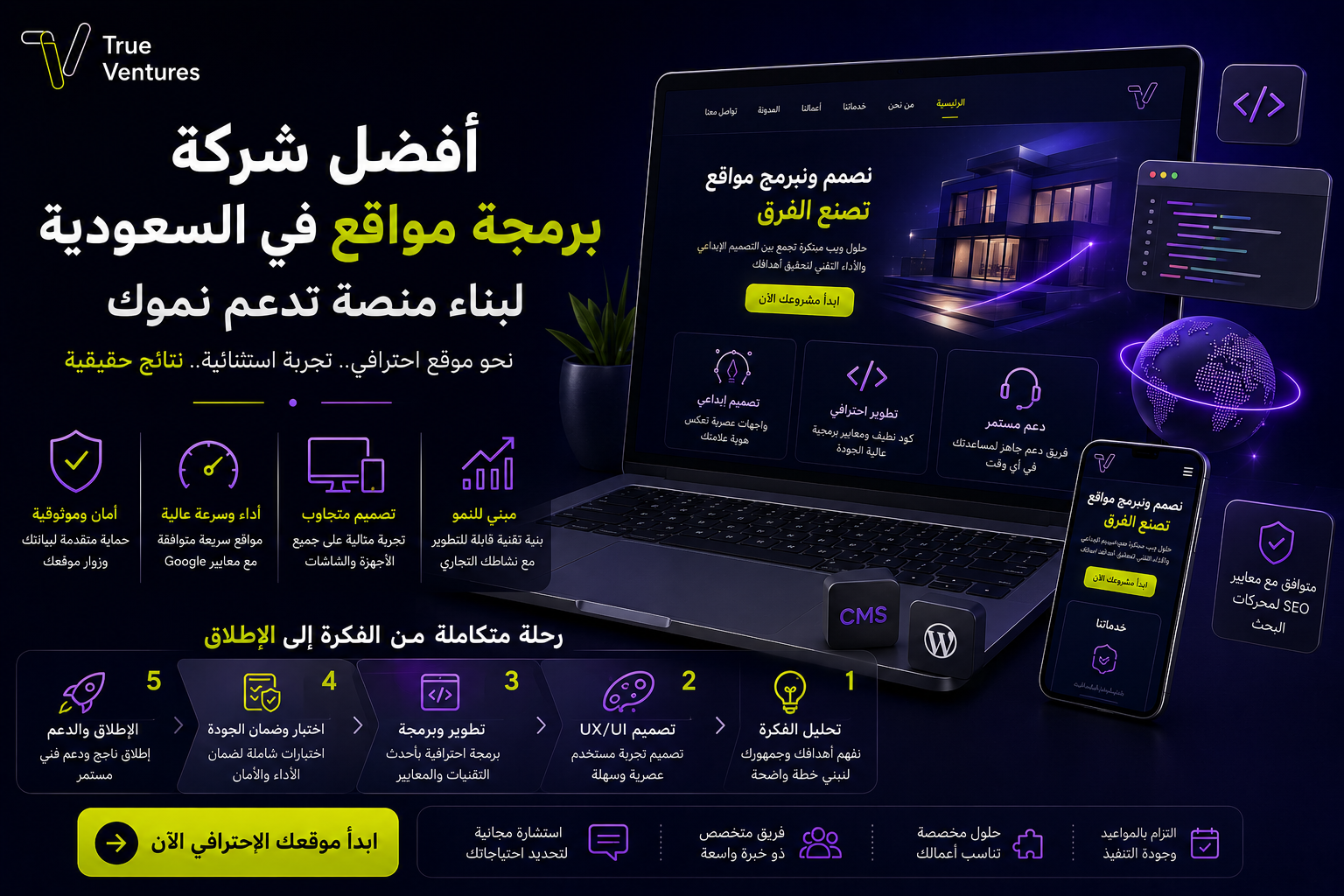
Looking for the best web development company in Saudi Arabia to turn your idea into a fast, secure platform? This guide walks you through every stage of building a website and the selection criteria that help your business achieve sustainable digital growth.
Why Website Development Matters for Your Business:
A website is no longer just a page that lists your company details. It has become an operations, marketing and sales platform that works around the clock. When a website is built around your business goals and your customers’ needs, it helps you establish a credible digital presence, attract new opportunities and run your operations more efficiently.
That is where working with the best web development company pays off: you get a digital product that serves clear objectives, rather than an attractive design that delivers no real value to the user.
Build Trust in Your Brand:
Your website is often the first point of contact between a customer and your brand, so page speed, ease of use, content quality and design all shape the impression a visitor forms.
A professional website presents your identity, services, projects and contact channels in a well-organised way, which builds trust and encourages customers to request a service or reach out to your sales team.
Reach Customers at Any Time:
A website lets your audience discover your services, submit requests, book appointments or buy products 24 hours a day, free from traditional business hours.
It can also connect to your CRM, payment, shipping and notification systems, cutting manual work and speeding up service delivery.
Power Your Digital Marketing:
Your website is the foundation that SEO, paid advertising and content marketing all depend on. The sounder its technical structure, the easier it is for search engines to understand and index its pages, and for customers to find the information they need.
It must also perform well on smartphones, because the mobile experience affects user satisfaction and your site’s ability to compete in search results.
Turn Data into Decisions:
Connecting your website to analytics tools shows you where your traffic comes from, which pages get the most views, where users drop off and how many complete your forms and orders.
This data helps you improve the user experience (UX), sharpen your marketing campaigns and make decisions based on real results instead of assumptions.
Get Ready to Grow and Scale:
Professional development plans for your future needs, such as adding an online store, an admin dashboard, a membership system, new languages or integrations with other systems.
This reduces the need to rebuild the whole website when your business expands or your customers’ requirements change.
The Stages of Website Development:
Professional website development moves through a series of connected stages, and neglecting any one of them affects the quality and performance of the final product.
1. Analysis and Requirements Gathering:
The best web development company starts by understanding the client’s business, target audience, project goals and the problems the website needs to solve.
Next, it defines the user types, pages, features, permissions and integrations required. On advanced projects, these requirements are documented clearly to set the scope of work and the technical specifications.
This step prevents mismatched expectations and stops unplanned features creeping in during the build.
2. Planning the Site Architecture:
Pages and information are arranged in a clear structure that helps users reach what they need with ease. This stage covers building the sitemap, mapping user journeys, organising content and defining how the different sections relate to one another.
The simpler and better thought-out the architecture, the better the user experience and the easier it becomes to manage content in the future.
3. UX and Interface Design:
Design begins with wireframes for each page, which are then turned into complete interfaces that reflect the company’s digital identity.
Good design is about more than looks. It means clear buttons, easy reading, simple forms, fast access to information and compatibility with every screen size.
4. Development and Coding:
Approved designs are turned into working pages and features. This stage includes:
- Building the front-end interfaces users interact with.
- Setting up databases and operational workflows.
- Creating an easy-to-use admin dashboard.
- Integrating the website with external systems and services.
- Applying permissions and security measures.
- Preparing the technical foundation for SEO.
The technology should be chosen to fit the nature and size of the project and its security and scalability requirements, not simply because it is popular.
5. Testing and Quality Assurance:
Pages, links, forms and features are tested across multiple devices and browsers to make sure every part of the website works correctly.
Professional testing covers:
- Performance and speed testing.
- Security and protection testing.
- Load and stability testing.
- Mobile compatibility testing.
- User experience testing.
- Database and permissions testing.
- A review of content, links and buttons.
Testing should not be treated as a short final step. It is an ongoing process throughout development that catches problems early.
6. Launch and Training:
Once feedback has been addressed and the final version approved, the website moves to the live environment, and the domain, hosting, SSL certificate, backups and analytics tools are configured.
The client’s team should also be trained to manage content, orders, users and permissions so they can run the website efficiently.
7. Maintenance and Growth:
Website development does not end at launch. Security updates, performance monitoring, bug fixes, user behaviour analysis and new features are all essential to keep the platform running at its best.
Ongoing maintenance also lets you evolve the website in step with customer needs and changes in the market.
What Services Do Web Development Companies in Saudi Arabia Offer?
Services vary with each company’s specialism and the capabilities of its team, but full-service development companies usually offer a broad range of digital solutions.
Corporate Website Design and Development:
Professional websites for companies and organisations that showcase services, projects and professional identity, with contact forms and flexible admin dashboards.
E-commerce Store Development:
Online stores that handle products, inventory, orders and promotions, with integrated payment and shipping options and built-in reporting.
Digital Platforms and Portals:
Platforms with user accounts, subscriptions, bookings, permissions, admin dashboards and custom operational workflows.
Enterprise Systems Development:
ERP, CRM, HR, operational and cloud systems that help organisations automate their processes and organise their data.
UX Design and Digital Identity:
Researching audience needs and designing user journeys, interfaces and interactive forms that reflect the brand identity and lift engagement rates.
Technical Integrations:
Connecting the website to payment, invoicing, CRM, inventory, delivery, SMS and other technical services.
Performance and Security Optimisation:
This service covers speeding up pages, reducing file sizes, optimising hosting, securing connections, managing permissions, creating backups and monitoring vulnerabilities.
Technical Support and Maintenance:
Support includes monitoring the website, fixing issues, updating components, keeping backups, improving performance and adding new features according to a clear plan.
How to Choose the Best Web Development Company
Calling a company the best web development company does not automatically make it the right fit for every project. The right choice depends on how well the company’s experience and methodology match your project’s needs.
Review Their Portfolio:
Look at the projects the company has delivered, and don’t stop at screenshots. Use the websites yourself and check browsing speed, page clarity and ease of use on mobile.
Ideally, choose a company with experience delivering a similar project in terms of features or complexity.
Assess How Well They Understand Your Business Model:
A professional development company doesn’t open with a ready-made template. It asks about your audience, goals, operating procedures and success metrics.
The more thorough the discovery phase, the better your chances of a website that delivers real value to your business and its users.
Examine Their Working Methodology:
Ask about the delivery stages, each party’s responsibilities, how designs are approved, how changes are handled, the timeline and how requirements are documented.
A clear methodology reduces the risk of delays or disagreements over project details.
Understand the Technology They Use:
Insist on modern, stable and secure technologies that allow the website to grow in future. Ask about code ownership, the ability to move hosting, the availability of technical documentation and how easy it is to add new features.
Verify Security and Data Protection:
The company should explain how it protects accounts and data, manages permissions, encrypts connections, creates backups, patches vulnerabilities and responds to security incidents.
It should also comply with local data protection standards and cybersecurity controls, especially on projects that handle sensitive information.
Make Sure the Site Is Mobile-Friendly:
The website must run smoothly on smartphones, tablets and computers, keeping content clear and actions easy to complete.
Resizing the page is not enough; menus, buttons, forms, images and every feature must be tested on different screens.
Build In SEO Requirements:
Ask for a fast, well-structured website with clear headings, readable URLs, editable page metadata and the ability to add alt text to images.
Setting up the technical foundation from the start helps you avoid indexing and visibility problems after launch.
Request a Clear Testing Plan:
Ask which types of testing will be carried out, which devices and browsers are covered, how bugs are documented and what the acceptance criteria are before the site goes live.
Review the Maintenance and Support Contract:
The contract should specify the support period, response times, covered faults, updates, backups and the cost of new development requests.
Don’t Choose on Price Alone:
The cheapest quote may leave out essential stages such as analysis, testing, security and technical support. Compare the scope of work, the quality of delivery and the expected value, not just the final price.
Why True Ventures Is the Right Choice for Your Website
True Ventures is a Saudi technology company that enables digital transformation for businesses and organisations, building digital products and platforms designed to grow and scale.
Its approach goes beyond delivering a set of pages. It starts by understanding your business model and analysing your users’ needs, then turns those requirements into an operational platform that serves your organisation’s goals.
True Ventures combines a Saudi investment vision, regional technical expertise and global methodologies for analysing, designing and developing systems. It also has dedicated teams in project management, user experience and software development.
The True Ventures methodology includes:
- Analysing the business model, market and users.
- Documenting the project scope and requirements.
- Designing the user experience and interactive interfaces.
- Developing a robust, secure and scalable website.
- Running performance, security, load and compatibility tests.
- Launching the website and training the client’s team.
- Providing ongoing support and optimisation.
- Developing the product in preparation for expansion or investment.
The company’s expertise is backed by international certifications, including ISO 9001 for quality management, ISO 27001 for information security and ISO 20000-1 for IT service management.
Common Website Design and Development Mistakes:
Starting Without Clear Project Goals
Without goals, you end up with pages and features that don’t serve the user. Define the outcomes you want and how you will measure them before design begins.
Prioritising Looks Over User Experience:
A website may look stunning yet still fail if its menus are complicated, its buttons unclear or its checkout steps too long.
Using a Template That Doesn’t Fit the Project:
Templates can suit simple websites, but they may limit features, performance and scalability. Choose your solution only after analysing the project’s requirements.
Ignoring the Mobile Version:
A website can work well on desktop and still deliver a poor experience on a phone. Test every page, form and feature across multiple screen sizes.
Neglecting Website Speed:
Unoptimised images, bloated code and unsuitable hosting slow browsing down and push up your bounce rate.
Leaving Security Until After Launch:
Security must be part of the project analysis, architecture, coding and testing, not an optional extra once the website is finished.
Not Documenting the Agreement:
Verbal requirements can lead to disputes over features, revisions and delivery. Document the scope of work, timeline, responsibilities and acceptance criteria.
Launching Without a Maintenance Plan:
Even a stable website needs updates, backups, security monitoring and continuous improvement to keep performing.
Start Building a Website That Supports Your Company’s Future:
Choosing the best web development company is a decision that shapes your customer experience, operational efficiency and ability to scale. Look for a partner who understands your goals, documents your requirements, applies proper design and security standards and keeps supporting the product after launch.
With True Ventures, the journey starts with analysing your idea and doesn’t stop when the website goes live. It continues into building a robust platform ready to grow, one that serves your users today and is prepared for tomorrow’s needs.
Contact the True Ventures team today to discuss your project and get a technical roadmap that turns your idea into a professional digital product delivering real value to your business.
Questions and answers
01What is the best web development company in Saudi Arabia?
The best company is one that combines an understanding of your business with hands-on delivery experience, strong user experience, security, thorough testing and ongoing support. True Ventures offers an end-to-end methodology that starts with analysis and extends into growth and optimisation.
02How long does it take to design and develop a website?
The timeline depends on the number of pages, features, integrations and the level of customisation. A corporate website usually takes less time than an online store or a platform with user accounts, permissions and connected systems.
03How much does it cost to design and develop a website?
The cost is determined by the project scope, design, features, technologies, integrations, and security and support requirements. That is why a quote should be prepared after analysing your needs, not based on the number of pages alone.
04What is the difference between web design and web development?
Design focuses on the user experience, the visual look and how the interfaces are organised, while development turns those interfaces into working pages, features, databases and systems.
05Is custom development better than ready-made templates?
Custom development suits projects that need tailored features, integrations or permissions and significant room to scale. Templates may be suitable for simple websites with limited requirements.
06Does website development include SEO?
Sound development should include the technical SEO essentials, such as site speed, responsiveness, a clear structure for headings and URLs, an XML sitemap and the ability to edit page metadata.
07Do I need a maintenance contract after my website launches?
Yes. Maintenance keeps your website secure, stable and compatible with updates, and it allows bugs to be fixed, backups to be taken and improvements to be added.
08How do I protect my website idea and project data?
You can use a non-disclosure agreement when needed, document ownership rights for the design, code and data, and set out access permissions and handover terms in the contract before work begins.
Turn this guide into a plan.
Tell us where you are today. Our team will map the next steps with you.
The quickest way
Have a question? Ask us on WhatsApp.
Tell us what you are planning and our team will point you to the right people — no form to fill in.
We usually reply within minutes during working hours.