






Mobile App Design for Digital Marketing: The Complete Guide
An app on your customer's phone is not a marketing result in itself. Learn how smart mobile app design turns downloads into sales, loyalty and data you can act on.

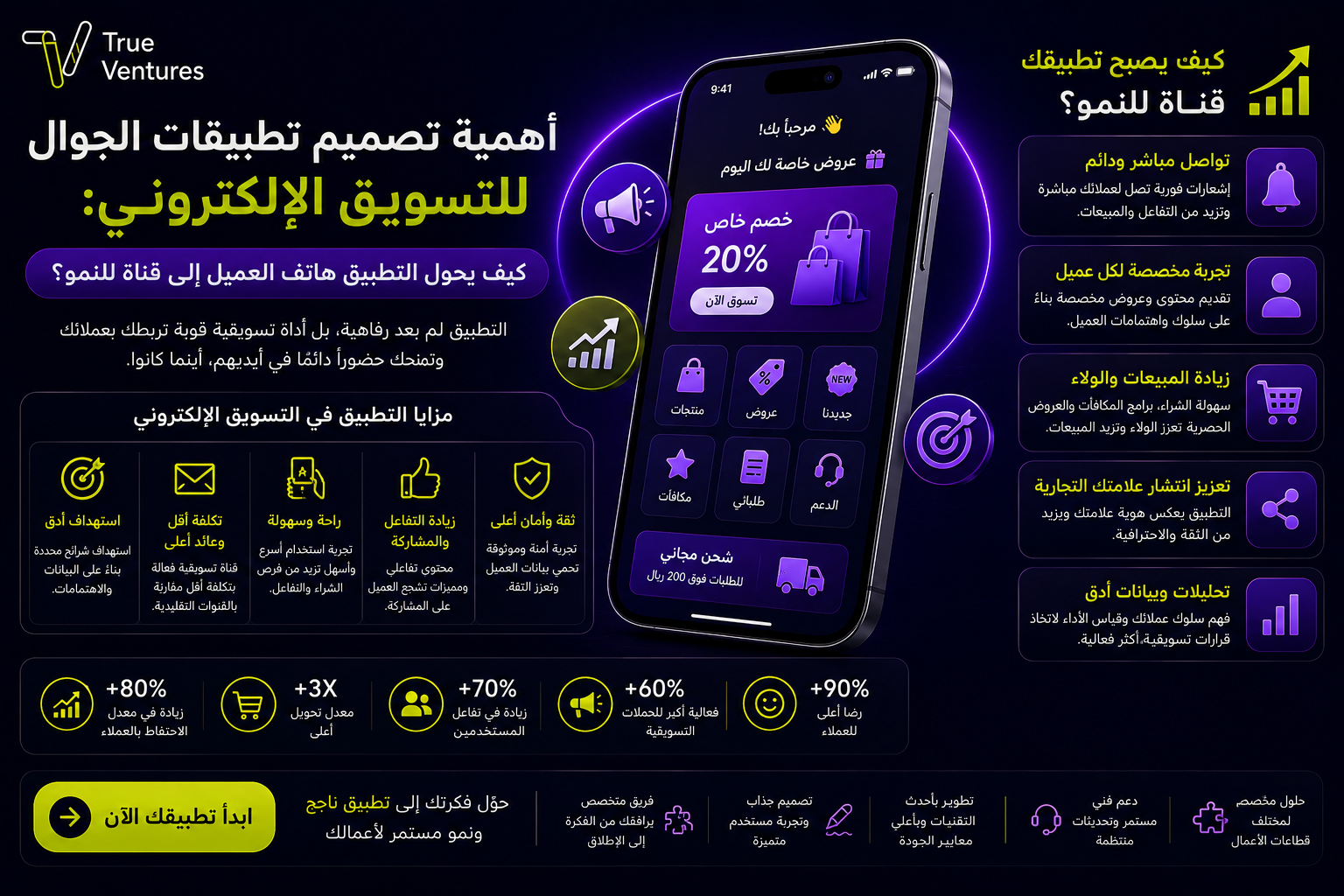
Smartphones now sit at the centre of the everyday customer journey, yet simply having an app does not guarantee marketing results. The real value of mobile app design for digital marketing lies in building an experience that makes your brand easier to reach, engagement quicker and buying smoother, while generating data that helps you understand customers and keep improving your campaigns.
What Is Mobile App Design?
Mobile app design is the process of building a complete digital experience that lets users get what they need done on their phone quickly and easily. It goes far beyond choosing colours and icons or creating attractive screens: it covers researching user needs, mapping a clear user journey, organising content and features, and turning all of this into a practical experience that can be measured and improved.
App design usually starts with understanding the business and its target audience, then defining the features users genuinely need. Next comes user experience (UX) design, followed by user interface (UI) design, then development, testing, launch and continuous improvement.
From a marketing perspective, design matters even more, because every screen in the app can influence a user’s decision. Where the buy button sits, how many steps registration takes, how easy search is, how quickly people reach a product or service and how offers are presented: each of these details can lift conversions or push users away.
That is why designing a successful app means bringing user needs and business goals together in one coherent experience.
Why Does Mobile App Design Matter for Digital Marketing?
The importance of mobile app design for digital marketing becomes clear when an app stops being just a piece of technology and becomes a direct channel that helps your brand attract customers, deepen their engagement and bring them back to buy again.
Direct Access to Your Customers
Once the app is installed, your brand lives on the customer’s phone, so they no longer have to search for you every time. With the user’s permission, push notifications can deliver important updates, offers or reminders tied to their interests.
This direct line lets businesses stay in touch with customers between purchases, instead of relying solely on paid ads to reach them all over again.
A Personalised Experience
An app can be designed to show content, products and services that match each user’s interests and past behaviour, based on the data available and the privacy consents they have given.
For example, an online store can surface products related to previous purchases, while a booking app can make it effortless to rebook a customer’s favourite service.
The more closely the experience reflects what users need, the more likely they are to keep engaging with the app.
More Sales and Conversions
A good app cuts the steps between users and their goal. When customers can find what they want and complete an order, booking or payment with ease, there are fewer points of friction that might make them abandon the process.
This is where mobile app design and digital marketing meet directly: an ad campaign may bring the user in, but it is the app experience that largely decides whether they complete the action you want.
Stronger Customer Loyalty
Loyalty programmes, points, rewards, coupons and exclusive offers can all be built into the app, giving customers a genuine reason to come back.
Over time, the app can become part of the customer’s relationship with your brand, especially when it delivers recurring value rather than relying on promotional messages alone.
A Clearer View of Customer Behaviour
Connected to the right analytics tools, an app shows a business exactly how customers use it: the most visited screens, the most used features, the steps where users drop off, and completion rates for purchases or sign-ups.
This data helps marketing and product teams make decisions based on how users actually behave, rather than on assumptions.
How App Design Supports Every Stage of the Customer Journey
A successful app does not only serve the sales stage; it can play a role in almost every stage of the customer journey.
Awareness
People can discover the app through ad campaigns, brand content, search engines and app stores. At this stage, the app’s value must be obvious: why should someone download it, and what will they get in return for the space and time they give it?
Consideration and Comparison
When customers start evaluating a product or service, the app can put the key information within easy reach: prices, features, reviews, offers and any details they need before deciding.
The faster and clearer this information is to find, the less effort it takes users to compare and make up their minds.
Conversion
This is one of the stages most affected by user experience. Long registration forms, cluttered screens and too many payment steps can lose you the customer at the very last moment.
The conversion journey should therefore be as clear and short as possible, with the main action you want users to take given pride of place.
Retention
After the first purchase or use, the app’s job is to encourage customers to return. You can achieve this through recurring services, relevant offers, loyalty programmes, personalised recommendations and notifications that genuinely add value.
Loyalty and Advocacy
When customers consistently get a stable, fast and useful experience, they are more willing to stay with the brand, rate the app or service, and even recommend it to others.
In this way, an app can serve the customer journey from the very first interaction all the way to a long-term relationship.
Key Elements of a Mobile App That Drives Marketing Results
An app’s success as a marketing tool does not depend on good looks alone. Several elements need to work together as a whole.
Ease of use comes first. Users should know what to do the moment they open the app, and find the core features without hunting for them.
Speed and performance are just as essential, because a slow or unstable app can waste everything your marketing campaigns achieved in winning that user.
A clear call to action (CTA) guides users to the next step, whether that is buying a product, booking an appointment, subscribing or requesting a quote.
Pay close attention to the sign-up and login experience too. If there is no real need to collect a lot of data up front, it is better not to ask users for it.
You should also maintain a consistent brand identity, so users feel they are in the same experience they know from your website and other platforms.
Just as important are security and data protection, particularly in apps that handle personal data, payments or sensitive information.
Finally, the app must be measurable and built to evolve: successful design is never static, but an experience that keeps improving based on data and user feedback.
How to Use a Mobile App in Your Digital Marketing Strategy
The best results come when the app works as part of your digital marketing ecosystem rather than as a separate project.
Ad campaigns can bring the right users into the app, and a well-designed onboarding experience then helps them reach its core value quickly.
The app can also be connected to your content strategy, email, messaging and loyalty programmes. If a customer viewed a product but did not buy it, you can build a tailored marketing journey to re-engage them, instead of sending the same message to every user.
You can also segment your app audience into groups such as new users, repeat customers, inactive customers and high-value customers, then tailor messages and offers to each segment.
Push notifications, however, should be used with care. Too many can annoy users or lead them to switch notifications off, while the right message at the right moment can bring a customer back and nudge them to finish something they started.
This is how the app becomes an integrated part of your digital marketing strategy rather than just one more channel.
When Does Your Business Need a Mobile App?
Not every business needs an app, but there are cases where investing in mobile app design and development makes clear sense.
An app is a good fit when customers use your service frequently, or when there are processes that a phone can make shorter and simpler.
Examples include online stores that depend on repeat purchases, delivery services, bookings, education platforms, financial services, membership and loyalty programmes, and some operational services for businesses.
You may also need an app if your service clearly benefits from the phone’s built-in capabilities, or if you have a large base of repeat customers and want a direct channel to engage with them.
The most important question to ask before you start is:
What extra value will customers get from the app that they cannot easily get from your current channels?
If there is a clear, measurable answer, the decision to build an app becomes far more logical.
When Building an App Is Not the Right Call
Despite the importance of mobile app design for digital marketing, building an app without a genuine need can become an extra cost rather than an investment.
You may not need an app if customers use your service only very rarely, or if a mobile-friendly website can handle every required function efficiently.
Nor is it wise to start an app project just because your competitors have apps. The fact that a competitor has one does not mean the same business model suits you.
It is also important to plan for life after launch. An app needs updates, maintenance, performance monitoring, UX improvements, bug fixes and compatibility with operating system updates.
So compare the cost of the app and its expected return against alternatives such as improving your website, building a web platform or investing in other marketing channels.
How to Measure Mobile App Success in Digital Marketing
One of the most common mistakes is treating download numbers as the main measure of success. An app can rack up thousands of downloads while only a handful of people actually use it.
To measure an app’s marketing success, track metrics that are tied to your business goals.
Activation rate: shows the share of new users who reach their first real value in the app, such as completing registration or placing a first order.
Retention rate: reveals the share of users who keep coming back to the app some time after installing it.
Conversion rate: measures the share of users who complete the target action, such as buying, booking or subscribing.
Customer acquisition cost (CAC): tells you how much it costs to win a new user or customer compared with the value they bring.
Customer lifetime value (LTV): shows the value a customer generates over the whole of their relationship with your business.
Uninstall rate: a high figure may signal a problem with the value the app offers, its user experience or its performance.
Repeat purchase rate: particularly important for e-commerce and for services that depend on returning customers.
Above all, do not read these numbers in isolation; analyse how they relate to one another to see where the opportunities for improvement lie.
Mistakes That Make a Mobile App Fail as a Marketing Tool
An app can be built on the latest technology and still fail as a marketing tool if it does not solve a real user need.
Among the biggest mistakes are starting development before understanding the audience, and piling on features just to make the app look complete, when customers really need only a small set of core functions.
Other mistakes include making registration or checkout complicated, sending frequent notifications unrelated to users’ interests, and having no clear strategy for attracting users after launch.
Ignoring data also keeps the same problems alive: if users keep leaving a particular screen, find out why and fix it, rather than simply increasing your ad spend.
Neglecting maintenance, security and app speed can likewise damage the customer experience and trust in your brand.
Launching the app is therefore not the end of the project, but the start of an ongoing cycle of measurement, analysis and improvement.
How to Choose an App Design Company That Serves Your Marketing Goals
Choosing an app design company should not come down to price or coding skills alone. A successful app needs a partner who understands your business model, audience and commercial goals before making technical decisions.
Start by asking about the discovery phase. Does the company try to understand your business, your users and your competitors? Does it define requirements and project scope clearly before development begins?
Then assess its experience in UX and interface design. The right company should be able to explain the reasoning behind its design decisions, not just show attractive screens.
Ask, too, about the technologies used and how well the app can scale, about performance and security testing, about support and maintenance after launch, and about how app usage will be measured and improved.
At True Ventures, digital product development is approached from a perspective that links technology to growth goals. The methodology starts with analysing the business model, market and users and defining the project scope and requirements, then designing the user experience, interfaces and interactive prototypes before moving into development.
The following stages include performance, security and compatibility testing, then launch, monitoring and technical support, leading to a growth phase that uses data to develop features, refine the product and prepare it to scale.
True Ventures offers mobile app design and development using Flutter and native development, alongside systems and digital platform development, digital experience and identity design, enterprise and government solutions, and digital growth services.
The company combines a Saudi investment vision with regional technical expertise, and holds ISO 9001, ISO 27001 and ISO 20000-1 certifications for quality, information security and IT service management.
So when you are looking for an app design company in Saudi Arabia, focus on one that can see your project as a commercial product built to grow, not just a collection of screens and code.
Conclusion: Make Your App a Growth Engine, Not Just a Digital Presence
The importance of mobile app design for digital marketing comes down to this: an app can bring user experience, direct communication, data, sales and loyalty together in a single digital channel.
But a successful app does not begin with choosing the technology or the look of the screens. It begins with understanding the user, defining the problem it will solve and the business result it needs to deliver.
When an app is built on clear foundations, then measured and developed according to the data, it can turn from a technical cost into a digital asset that supports your business growth for the long term.
If you have a new app idea, or want to develop an existing app and improve its user experience, True Ventures can take you from idea and analysis through design, development, launch and growth.
Talk to True Ventures about your project, and start building a digital product that serves your customers today and is ready to grow and scale tomorrow.
Questions and answers
01Why is mobile app design important for digital marketing?
Apps give you a direct channel to engage with customers, improve the user experience and make buying and booking easier. They also support personalisation and loyalty programmes, and collect data that helps you make better decisions and sharpen your marketing campaigns.
02Is an app better than a website for marketing?
There is no single answer for every business. A website is important for reaching audiences through search and links, while an app is more effective where people need frequent use, a personalised experience and quick access to services. In many projects, the website and the app work together.
03Does designing a mobile app help increase sales?
An app can help increase sales when it cuts the steps to purchase, offers a fast and relevant experience and encourages customers to come back. But having an app alone does not guarantee more sales; the result depends on the quality of the product, the experience and the marketing.
04How does a mobile app increase customer loyalty?
By making it easy to return to the service and offering a personalised experience, points and rewards programmes and relevant offers, as well as keeping the customer's order history, preferences and the services they use regularly.
05Are push notifications important in app marketing?
Yes, when they are used thoughtfully. They work well for order updates, reminders and relevant offers, but overdoing promotional messages can lead users to switch notifications off or delete the app.
06What is the difference between mobile app design and app development?
Design defines the user experience and user journeys, and how content, interfaces and interactions are organised. Development is the stage where those requirements and designs are turned into a working software application.
07How do I know if my business needs an app?
If your customers need to come back to your service frequently, if there are processes an app could make faster and easier, or if there is clear value that your website alone cannot deliver as efficiently, investing in an app may be the right move.
08What are the most important app success metrics?
They depend on your project goals, but the key ones are activation rate, user retention, conversion, frequency of use or purchase, customer acquisition cost and customer lifetime value.
Turn this guide into a plan.
Tell us where you are today. Our team will map the next steps with you.
The quickest way
Have a question? Ask us on WhatsApp.
Tell us what you are planning and our team will point you to the right people — no form to fill in.
We usually reply within minutes during working hours.