





How to Build a Restaurant Ordering App: Features, Cost and Timeline
A restaurant ordering app makes ordering effortless for your customers and brings order to your operations. Explore the features, cost factors and steps to build one that grows with you.

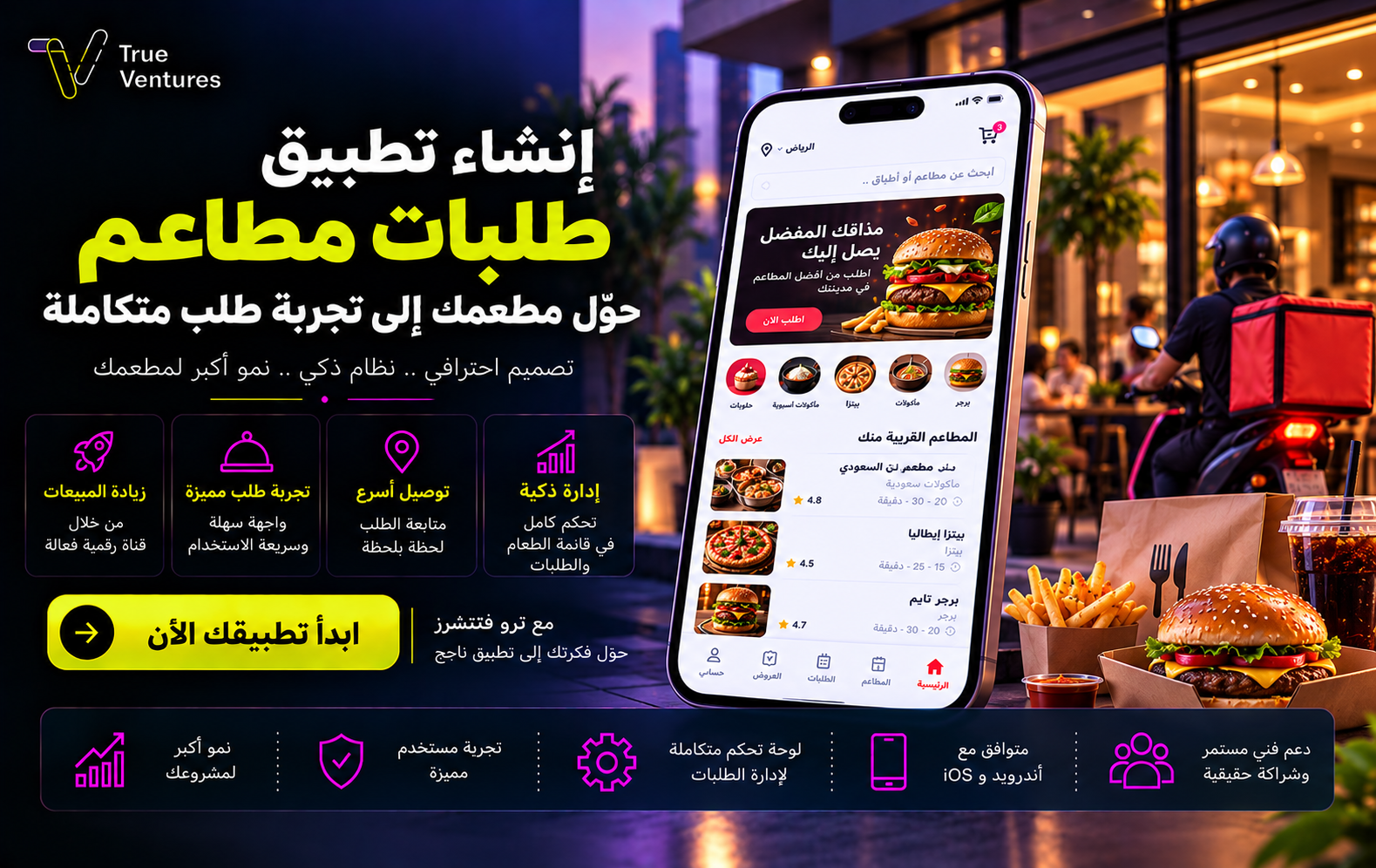
Building a restaurant ordering app gives your customers an effortless way to order and helps you run your operations with far less chaos. Discover the key features, the factors that drive cost, and the steps to develop an app that supports your restaurant’s growth with True Ventures.
Why Does Your Restaurant Need an Ordering App?
When your orders are scattered across phone calls, messages and different sales channels, keeping track of the details gets harder. Staff may respond late, meal add-ons may be recorded incorrectly, or it becomes difficult to keep customers informed about their order status.
This is where building a restaurant ordering app pays off: it brings all of these processes into one clear system, from choosing a meal right through to delivery or pickup from the branch.
Easier Ordering and More Repeat Purchases
The app lets customers browse the menu, customise their meal, save their address and reorder their favourites. The easier the buying journey, the fewer obstacles there are that might make them abandon an order before completing it.
Smoother Coordination Between Branches, Kitchen and Delivery
Orders can be routed to the right branch, displayed to the preparation team, then updated once they are ready. This helps staff know exactly what is needed and who is responsible for each stage.
A Sales Channel That Carries Your Brand
The app gives you a space to showcase your products, offers and loyalty programme in a style that reflects your brand. It also lets you measure metrics such as order frequency and average basket value, and use them to improve your service.
That said, the app needs well-organised operations and a marketing plan: its success depends as much on food quality, order accuracy and reliable delivery as it does on the code.
What Features Should a Restaurant Ordering App Have?
The features you need depend on your business model: an app for a single restaurant, a chain of branches, or a platform that brings together multiple restaurants. That is why restaurant app development starts by defining the users and the order flow before choosing any features.
A Clear Menu That Is Easy to Update
The menu includes meal photos, prices, sizes, add-ons and ingredient descriptions. Administrators should be able to switch off unavailable items and set different products and prices for each branch when needed.
Meal Customisation and a Transparent Cart
Customers need to choose sizes and add-ons and enter their notes with ease. It is best to show the total amount and delivery fee before the order is confirmed, and to make it clear which options are unavailable.
Payment Methods Your Customers Prefer
The app can be connected to a payment gateway that supports methods such as Mada, cards and Apple Pay, depending on the payment provider’s capabilities and integration requirements. Cash on delivery can also be added if it suits your restaurant’s policy.
Development also covers handling failed payments and refunds, and preventing duplicate orders when a customer retries.
Order Tracking and Notifications
Order statuses show stages such as received, being prepared, ready for pickup and out for delivery. Tracking the driver on a map, however, requires a delivery system that provides location data; simply adding a map to the app is not enough.
An Admin Dashboard to Run Your Restaurant
The admin dashboard lets you manage orders, branches, the menu, offers and permissions, and review reports on sales, cancellations and preparation times.
Delivery Management and a Loyalty Programme
If you run your own delivery fleet, a driver interface can be developed to assign tasks and update delivery statuses. You can also add points, rewards and coupons that encourage customers to come back, with rules that protect your profit margin.
It is best to launch the core features first, then add the ones that usage data proves are needed.
How Much Does It Cost to Build a Restaurant App?
The cost of building a restaurant ordering app depends on the project scope, the number of system components and the integrations required. An app for a single restaurant is very different from a multi-restaurant platform with commissions, financial settlements and driver management.
The main factors that affect cost are:
- Business model: a single restaurant, a chain of branches, or a platform that brings several restaurants together.
- System components: the customer app, the admin dashboard, and a kitchen display or driver app where needed.
- Platforms: Android and iOS, and the development approach that suits the project.
- Integrations: payments, maps, point of sale (POS), inventory and messaging.
- Feature complexity: loyalty, scheduled orders, delivery dispatch and advanced reporting.
- Quality and operations: testing, hosting, maintenance and post-launch support.
It is important to separate the development cost from recurring operating expenses, such as hosting, messaging, map services and payment fees.
At True Ventures, we start by analysing your project’s requirements to define what the first release needs, then prepare a clear scope of work and a technical and financial proposal. This helps you direct your budget to the features that genuinely serve your restaurant’s operations.
How Long Does It Take to Build a Restaurant Mobile App?
The restaurant ordering app design and development process moves through connected stages: requirements analysis, UX design, development, integration, testing and preparation for publishing.
For initial planning, a custom app with a limited scope may take a few months, while systems covering multiple restaurants, branches and integrations take longer. This is an indicative estimate, not a fixed delivery time or a commitment from True Ventures.
The timeline is affected by factors including:
- How clear the requirements are and how quickly designs are approved.
- Whether the menu, photos and branch data are ready.
- Whether your existing systems can be integrated.
- The volume of changes requested during development.
- Testing results and app store review procedures.
To reduce delays, prepare your delivery, cancellation and refund rules and staff responsibilities before development begins, as these details directly shape the system design.
Which Age Group Uses Restaurant Ordering Apps the Most?
It is not possible to name a single age group as the heaviest users across all restaurants and cities without recent, specific data. The audience for a fast-food app differs from that of family restaurants or healthy meal services.
A project can start with assumptions that target segments such as university students, young professionals and families, then validate them using order data, customer surveys and campaign results.
What matters most is that the design reflects the needs of your actual audience:
- Working professionals may value scheduled orders and quick reordering.
- Families may need group meals and multiple customisation options.
- Customers looking for specific meals need clear ingredient descriptions.
That is why we build an easy experience with readable type, clear buttons and short ordering steps, then refine it based on real usage.
What True Ventures Delivers in Restaurant Ordering App Design
True Ventures is a Saudi technology company that combines business analysis, UX design and software development to turn your app idea into an operational product built to scale.
Business Model and Requirements Analysis
We get to know your restaurant, your number of branches, how you receive orders and how preparation and delivery work. We then document the requirements and define the system components and implementation priorities.
User Experience and Interface Design
We design a journey that runs from browsing the menu to completing and tracking the order, reflecting your restaurant’s brand identity, supporting Arabic and keeping the app easy to use. We also build interactive prototypes so you can review the experience before development.
App and Admin Dashboard Development
We choose the right technology, such as Flutter or native development, based on your performance, integration and maintenance needs. We then develop the agreed components for managing customers, orders, branches and delivery.
Testing, Launch and Ongoing Support
We test scenarios such as lost connections, failed payments, sold-out items and simultaneous orders. Our methodology also includes performance, security and compatibility testing, followed by handover, training and support within the contract scope.
Improving the Product After Launch
We help you define measurable metrics such as order completion, repeat purchases and preparation time. Based on these, the experience can be refined and new features added to support your expansion.
Start Building Your Restaurant Ordering App With True Ventures
A successful app starts with understanding how your restaurant works, then turning that into an easy experience for customers and a clear system for your operations team. Once the features, integrations and launch plan are defined, the project becomes far easier to deliver and develop.
Talk to True Ventures and share your restaurant idea and its needs. We will help you define your app’s scope and design a solution that handles ordering, payment and delivery and keeps pace with your growth plans.
Questions and answers
01Can I build an app for just one restaurant?
Yes. It can include the menu, ordering, payment and branch pickup or delivery, without needing the features of a multi-restaurant platform.
02Does a restaurant ordering app need a driver app?
That depends on how you handle delivery. If you manage your own drivers, you may need a dedicated app or interface for them. Integrating with an external delivery provider depends on that provider's technical capabilities.
03Can a restaurant app be integrated with a POS system?
Yes, if the POS system supports integration and provides suitable interfaces. The integration options should be checked before the cost and timeline are confirmed.
04Can the app work on both Android and iPhone?
Yes. You can choose cross-platform or native development depending on the project's features and performance requirements.
05How is customer data protected in a restaurant app?
Protection includes secure connections, controlled staff permissions, collecting only the data you need, securing your systems and a clear privacy policy. The details are reviewed according to the type of data and the services used.
06Can I add branches and features in the future?
Yes, provided the expansion plan is built into the system design. That is why it helps to discuss expected branches and integrations from the analysis stage.
Turn this guide into a plan.
Tell us where you are today. Our team will map the next steps with you.
The quickest way
Have a question? Ask us on WhatsApp.
Tell us what you are planning and our team will point you to the right people — no form to fill in.
We usually reply within minutes during working hours.